No products in the cart.


Best Portable Solar Panels for RVs (2026)
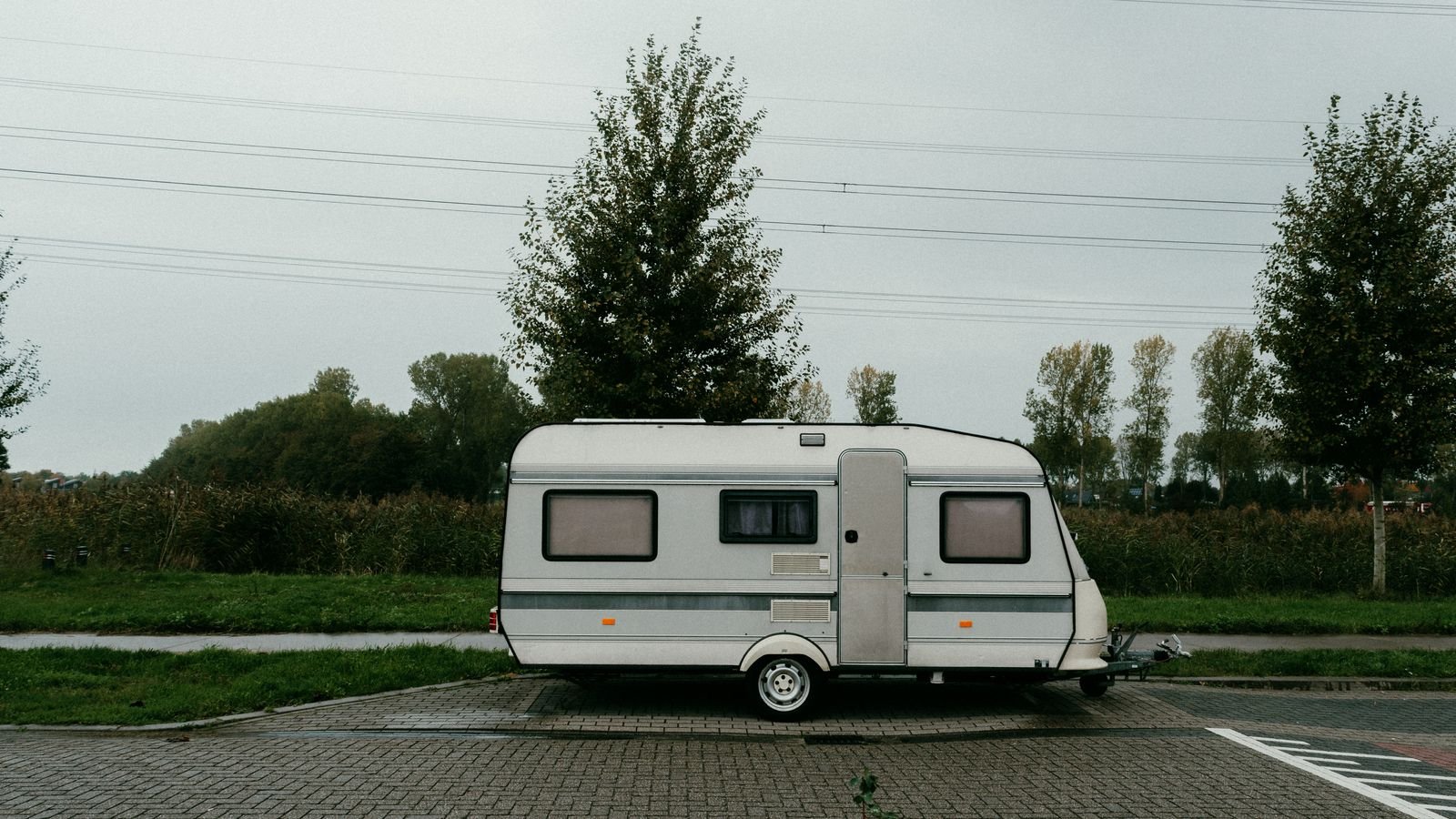
Most RVers need about 200–400 W of portable solar panels, enough to replace roughly 750–1,500 Wh a day in 5 hours of good sun. That covers a 12V fridge, lights, a fan, phones and a laptop. It will not run a rooftop air conditioner. The right panel also has to fit your power station’s input limits, which is where many buyers go wrong.

Quick answer
- Size: daily Wh ÷ (sun hours × 0.75). A 1,440 Wh day needs about 400 W of panels.
- Folding vs rigid: folding panels can chase the sun and park in shade; rigid roof panels are cheaper per watt and always on.
- Compatibility: check your station’s max solar watts, voltage range and connector before you buy.
- Typical price: about $230–$430 for a 200–220 W folding panel at major retailers in October 2026. Prices change often.
- Limit: portable panels can’t realistically run a 13,500 BTU RV air conditioner all day.
How many watts of solar do I need for my RV?
Start with your daily energy use in watt-hours (Wh). Multiply each device’s watts by the hours you use it. Then add them up.
| Device | Math | Wh per day |
|---|---|---|
| 12V compressor fridge | about 50 W × 24 h × 50% run time | 600 |
| LED lights | 20 W × 5 h | 100 |
| Water pump | 60 W × 0.5 h | 30 |
| Roof vent fan | 30 W × 8 h | 240 |
| Phones and laptop | a few charges | 150 |
| CPAP, no humidifier | 40 W × 8 h | 320 |
| Total | 1,440 |
Now size the panels. Use your peak sun hours (4–6 in most of the US) and a 0.75 factor. That factor covers panel angle, heat, wiring and charging losses.
- Usable sun: 5 sun hours × 0.75 = 3.75 hours
- Panel watts: 1,440 Wh ÷ 3.75 h = 384 W
- Round up: two 200 W panels = 400 W
Drop the CPAP and fan and the load falls to 880 Wh. Then 880 ÷ 3.75 = about 235 W, so one 200–220 W panel gets you close on sunny days.
| Camping style | Daily use | Portable solar | Power station size |
|---|---|---|---|
| Weekend, lights and phones | Up to 500 Wh | 100–200 W | About 300–500 Wh |
| Typical boondocking with 12V fridge | About 1,000 Wh | 200–300 W | About 1,000 Wh |
| Full-time, fridge + CPAP + fan | About 1,500 Wh | 400 W+ | About 2,000 Wh |
| Running the RV air conditioner | 10,000 Wh+ | Not practical with portable panels | Generator or shore power |
Why not the AC? A typical 13,500 BTU rooftop unit draws roughly 1,200–1,500 W while running. Eight hours at 1,300 W is 1,300 × 8 = 10,400 Wh. That would take close to 2,800 W of panels (10,400 ÷ 3.75). Our solar air conditioner guide covers what it really takes.
If your fridge is the big load, see how long a 100Ah battery runs a fridge for the battery side of the math.
Are folding or rigid solar panels better for an RV?
Both work. Many full-timers end up with rigid panels on the roof and one folding panel for shady campsites.
| Factor | Folding / portable | Rigid roof-mounted |
|---|---|---|
| Install | None; unfold and plug in | Drilling, sealing, roof wiring |
| Shade | Park in shade, put panels in sun | Only works if the roof is in sun |
| Aim | Can tilt toward the sun for more output | Usually flat, which costs output |
| Cost per watt | Higher | Lower |
| Charging while driving | No | Yes |
| Theft risk | Higher; lock it | Low |
| Setup each stop | 5–10 minutes | None |
Folding panels suit renters, short trips and anyone who camps under trees. Rigid panels suit full-timers who want hands-off charging. A complete roof package is covered in our solar panel kits guide.
Will a portable solar panel work with my power station?
Check three things on your power station’s spec sheet before you buy any panel.
- Max solar watts. Extra panel watts beyond this are wasted. Jackery lists the Explorer 1000 v2 at 400 W max across its DC inputs. EcoFlow lists the DELTA 3 Plus at 1,000 W (two 500 W ports).
- Voltage range. Panels in series add volts. EcoFlow lists the DELTA 3 Plus ports at 11–60 V. Two EcoFlow 220 W panels (21.5 V open-circuit each) in series give 21.5 × 2 = 43 V, inside the limit with room for cold-morning voltage rise.
- Connector. Stations use XT60, DC7909, DC8020 or Anderson inputs. Panels often use MC4. You may need an adapter cable.
Same-brand panels usually plug straight in. Mixing brands works if volts, watts and connectors line up. Our series vs parallel wiring guide shows the math. Still picking a station? Read EcoFlow vs Jackery or Bluetti vs EcoFlow.
What are the best portable solar panels for RVs in 2026?
We compared spec sheets and warranty terms for three widely sold 200 W-class options. We did not test them hands-on. The specs below come from each maker’s US product page.
| Spec | EcoFlow 220W Bifacial | Jackery SolarSaga 200W | Renogy 200W Suitcase |
|---|---|---|---|
| Rated power | 220 W front (175 W rear) | 200 W | 200 W |
| Open-circuit voltage | 21.5 V | 22 V | 21.47 V |
| Listed efficiency | 25% | About 25% | Up to 25% |
| Weight | About 15.4 lb | About 14.3 lb | 28.46 lb |
| Folded size | 24.2 × 23.2 × 1.3 in | 23.6 × 23.5 × 1.6 in | 34.3 × 22.8 × 3.2 in |
| Water rating | IP68 | IP68 | Not listed for kit |
| Included controller | None (plugs into station) | None (plugs into station) | 20A PWM, alligator clips |
| US warranty | 12 months | 3 + 2 years | 5 years materials and workmanship |
| Price, Oct 2026 | List $399; often less on sale | List $429 | About $230–$323 |
EcoFlow 220W Bifacial: most watts per pound
It is the highest-rated panel here and among the lightest. The bifacial back can add output when light reflects off sand, snow or concrete. The catch is the warranty: EcoFlow’s US page lists just 12 months, short next to Jackery and Renogy.
Jackery SolarSaga 200W: best warranty for a folding panel
It is the lightest panel in the table and carries a 3 + 2 year warranty. It costs the most at list price. It is the simple choice if you own a Jackery Explorer, since it is built for those inputs.
Renogy 200W Suitcase: best for a 12V house battery
This kit includes a PWM charge controller and alligator clips, so it can charge a 12V RV battery directly. It is about twice as heavy and bulkier when folded. If you charge a power station instead, check whether it accepts the panel without the built-in controller. For a lithium house battery, see our 12V 100Ah LiFePO4 price guide.
How do I get the most out of portable RV solar?
- Tilt and turn. Face the panel south and re-aim it 2–3 times a day.
- Avoid partial shade. A shadow across a few cells can cut output sharply.
- Keep cables short and thick. Long, thin extension cables waste power.
- Plan for winter. Sun hours can drop to 2–3 in northern states, so output may fall by half.
Is RV solar wiring safe to do yourself?
Plugging a portable panel into a power station is low-risk DIY. Wiring panels into your RV’s 12V system or 120V circuits is different. Use proper fuses, wire sized for the current, and a charge controller matched to your battery. For roof mounts or any work on 120/240V circuits, hire a licensed electrician or a certified RV technician. Solar wiring is covered by the National Electrical Code (NEC Article 690), and RV wiring by NEC Article 551. Check local rules if the RV is a fixed dwelling.
Frequently asked questions
How many solar panels do I need to run my RV?
For a typical 1,000–1,500 Wh day, plan on 300–400 W of panels. That is two 200 W portable panels for most people.
Can portable solar panels run an RV air conditioner?
Not for long. A rooftop AC can use 10,000 Wh or more in a day, which would need close to 2,800 W of panels plus a large battery.
Can I use a different brand of panel with my power station?
Usually, yes. Match the voltage range and max watts, then use the right adapter cable for the connector.
Do portable solar panels work on cloudy days?
Yes, but output can drop to 10–25% of rated power under heavy cloud. Size up or carry a backup charging option.
Sources
- EcoFlow: 220W Bifacial Portable Solar Panel
- Jackery: SolarSaga 200W Solar Panel
- Renogy: 200W Foldable Solar Suitcase
- NREL PVWatts Calculator
Last updated: October 2026. Specs and prices are from manufacturer pages and change often. This article is for information only and is not electrical advice.



Leave a Reply


- Trending
- Latest
- Comments








Solar Energy Supply Stores provides current solar prices in Nigeria, expert product reviews, comparisons, and practical buying guides for solar panels, inverters, batteries, generators, and complete solar systems nationwide.
Comments 2