No products in the cart.


How Much Does a Complete Solar System Cost in Nigeria? (2026)
How much does a complete solar system cost in Nigeria? In 2026, a complete solar power system can cost from approximately ₦650,000 for a small entry-level setup to ₦12 million or considerably more for a large residential or commercial installation.

The actual price depends on much more than the inverter size.
For example, two installers may both quote you for a 5KVA solar system, but one quotation may include a 5kWh lithium battery and six solar panels, while another includes 10kWh of battery storage and eight or ten high-wattage panels.
Both may use a 5KVA inverter, yet their performance, backup time, solar-generation capacity and total prices will be very different.
As a general 2026 market guide:
| Complete Solar System | Estimated Price Range |
|---|---|
| 1KVA–1.5KVA | ₦650,000 – ₦1,800,000 |
| 2KVA–2.5KVA | ₦1,000,000 – ₦2,400,000 |
| 3KVA–3.5KVA | ₦1,200,000 – ₦3,500,000 |
| 5KVA | ₦2,200,000 – ₦7,000,000+ |
| 7.5KVA | ₦4,000,000 – ₦8,500,000+ |
| 10KVA | ₦5,800,000 – ₦12,000,000+ |
| 15KVA+ | ₦8,000,000 – ₦20,000,000+ |
These are estimated Nigerian market ranges, not fixed quotations.
The final amount depends on the inverter brand, battery chemistry and capacity, number and wattage of solar panels, mounting system, electrical protection, cables, installation complexity, transportation and installer.
This guide explains the complete solar system cost in Nigeria, what you should expect at different system sizes, what each system may be capable of powering, and what you should check before accepting an installation quotation.
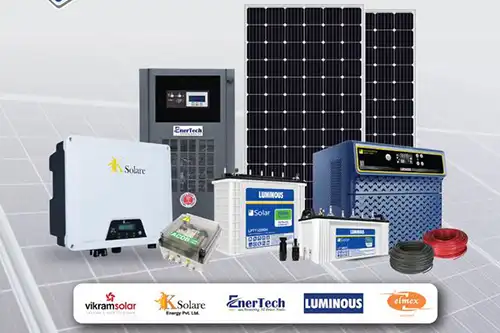
What Is Included in a Complete Solar System?
When someone advertises a complete solar system in Nigeria, don’t assume that the price includes everything necessary for installation.
A genuinely complete installed solar system will typically include several components.
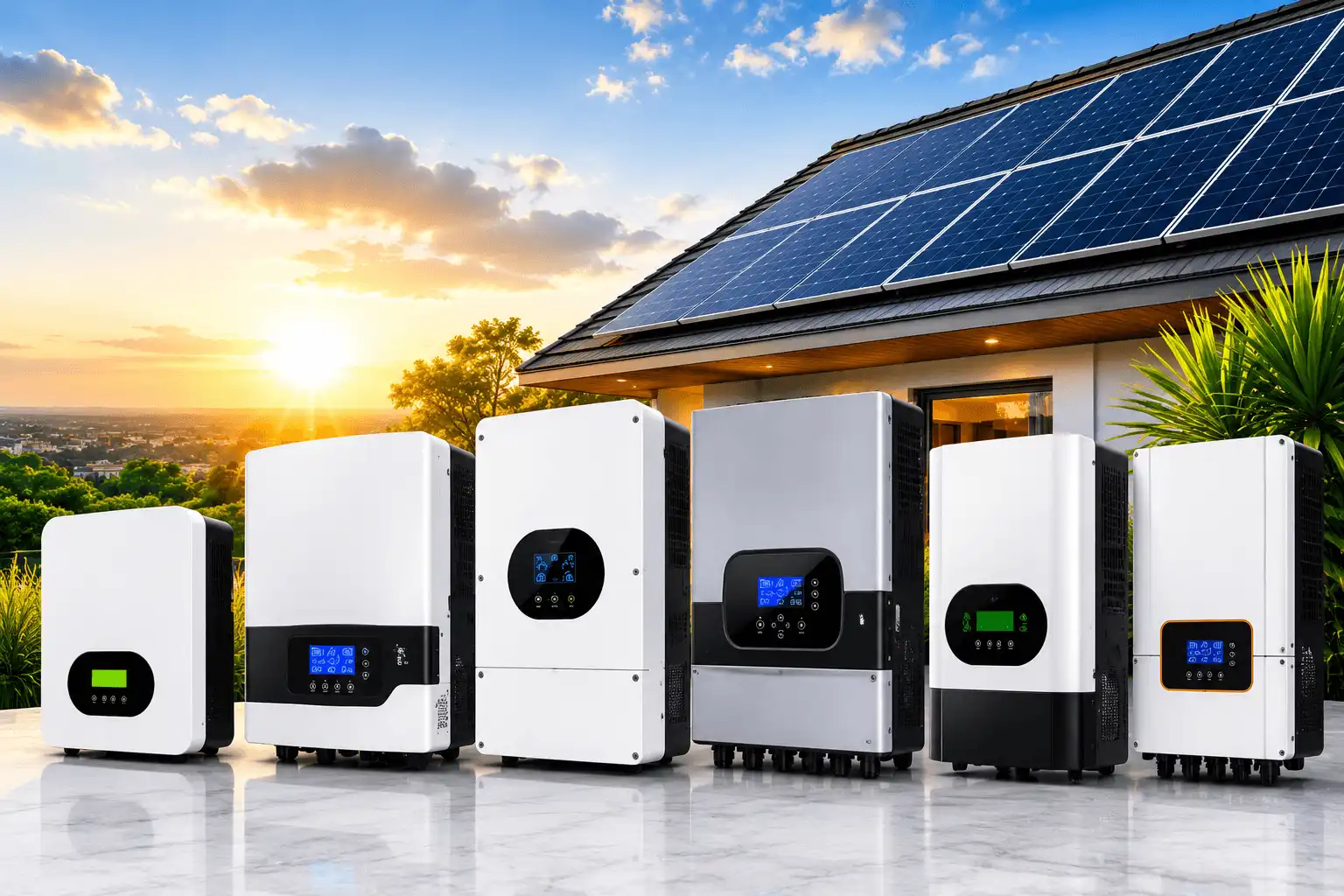
Solar Inverter
The inverter converts DC electricity from the batteries or solar system into AC electricity that appliances in your home or business can use.
The inverter’s KVA or kW rating affects how much load the system can handle at the same time.
Solar Panels
Solar panels generate electricity from sunlight.
The total panel capacity is normally expressed in watts or kilowatts.
For example:
- 4 × 550W panels = 2.2kW solar array
- 6 × 550W panels = 3.3kW solar array
- 8 × 550W panels = 4.4kW solar array
- 10 × 550W panels = 5.5kW solar array
- 20 × 550W panels = 11kW solar array
The number of panels needed depends on your energy consumption, battery capacity, available roof space and inverter specifications.
For current prices of individual panels, see our Solar Panel Price in Nigeria guide.
Solar Battery
The battery stores electricity so that you can continue using your appliances when solar production is low or unavailable.
Modern systems typically use either:
- Tubular lead-acid batteries
- Gel/AGM batteries
- Lithium-ion batteries
- LiFePO4 lithium batteries
Battery capacity is one of the biggest reasons complete solar-system quotations differ so much.
A system with 5kWh of usable storage cannot provide the same backup duration as one with 10kWh or 15kWh under the same load.
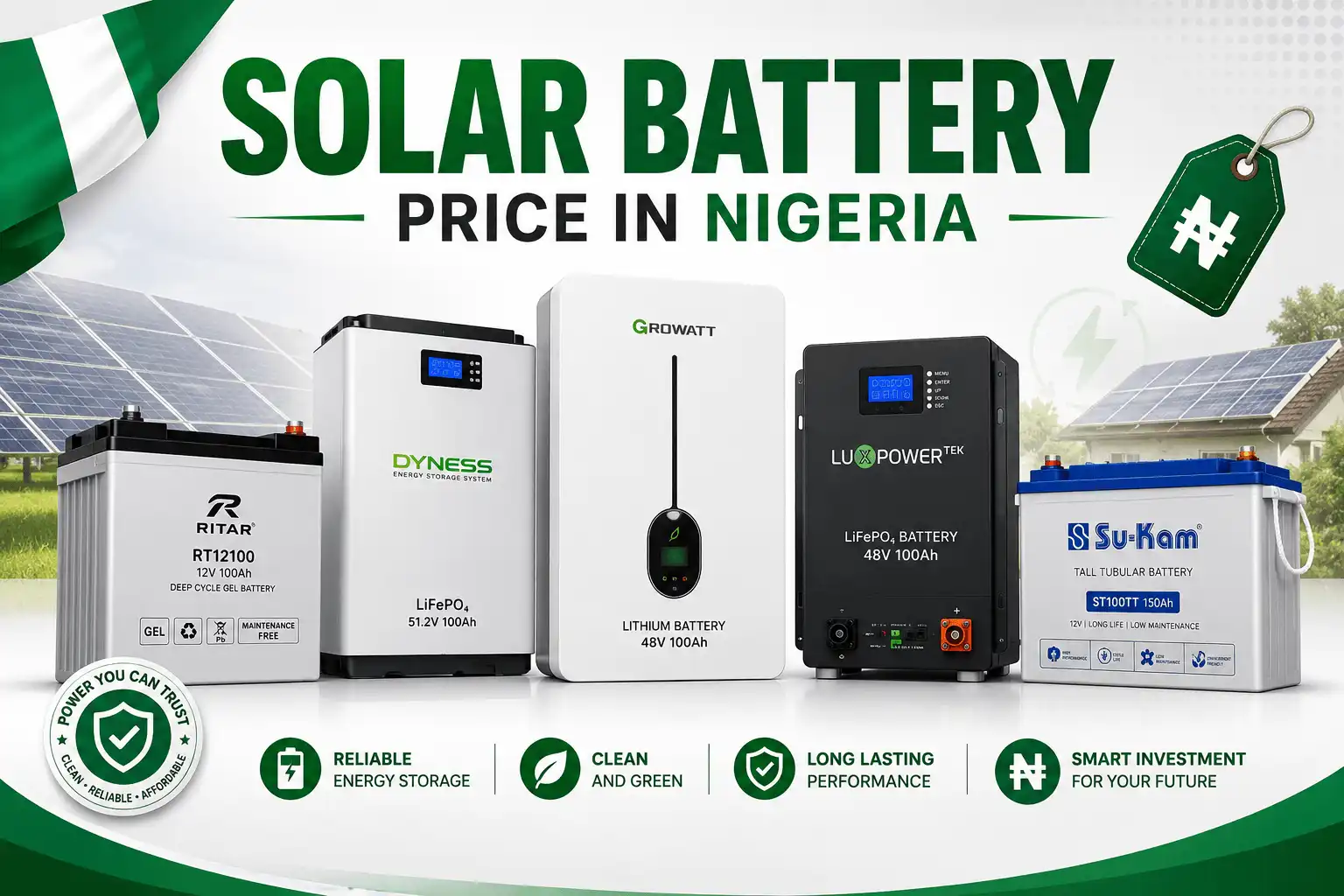
Check our detailed Solar Battery Price in Nigeria guide for battery-specific prices.
Mounting Structure
Solar panels require mounting rails, brackets and other structural components to secure them properly to the roof or ground-mounted structure.
Solar Cables and Connectors
A professional installation may require:
- DC solar cables
- AC cables
- MC4 connectors
- Battery cables
- Cable trays
- Conduits
- Lugs
- Terminals
Cable quality and correct sizing are important for performance and safety.
Electrical Protection
Depending on the installation, protection may include:
- DC breakers
- AC breakers
- Surge protection devices
- Isolators
- Fuses
- Distribution boards
- Changeover switches
- Earthing
- Lightning protection
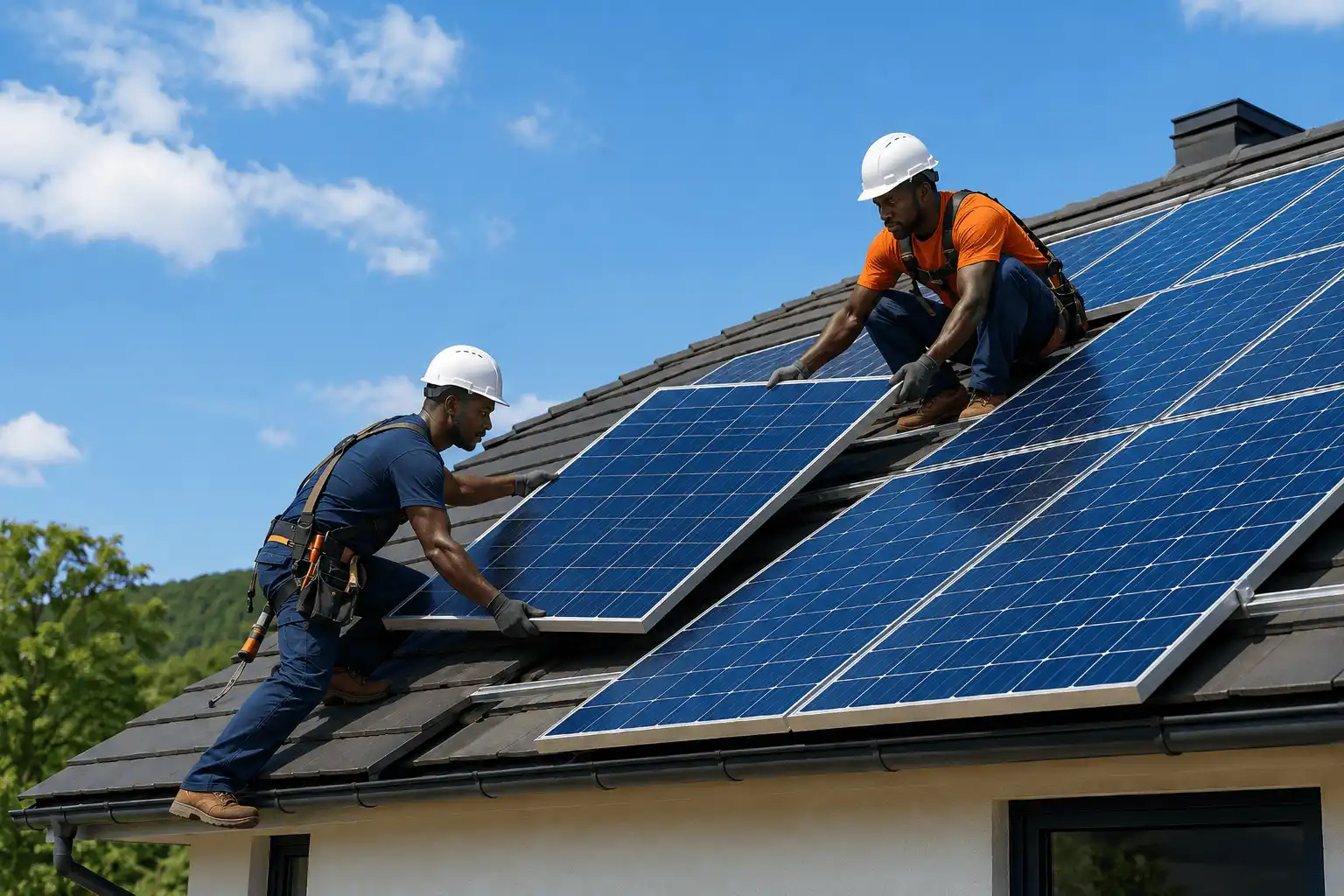
Installation and Labour
The complete price may also include:
- Site assessment
- System design
- Roof work
- Panel mounting
- Electrical wiring
- Programming
- Testing
- Commissioning
- Transportation
- Engineering labour
Always establish whether these items are included before comparing quotations.
Complete Solar System Price in Nigeria by Size
Let’s examine what Nigerians can expect at different solar-system capacities.
1KVA to 1.5KVA Solar System Price in Nigeria
A 1KVA to 1.5KVA complete solar system in Nigeria may cost approximately:
₦650,000 – ₦1,800,000
The lower end may involve a relatively basic configuration using smaller battery storage and fewer panels.
A higher-priced version may use lithium storage, a hybrid inverter, higher-wattage panels and more complete electrical protection.
Typical configuration may include:
- 1KVA–1.5KVA inverter
- 1 × 200Ah/220Ah tubular battery or suitable lithium battery
- Approximately 2–4 solar panels
- Mounting accessories
- Cables and protection
- Installation
What can a 1.5KVA solar system power?
Depending on the inverter’s actual continuous output and the appliances involved, a properly designed small system may support essentials such as:
- LED bulbs
- Television
- Decoder
- Wi-Fi router
- Laptops
- Phone charging
- One or more fans
A refrigerator may be possible on some properly configured systems, but its starting surge and daily energy consumption must be considered.
A small system should not be selected simply because it is cheap.
If your electricity demand is higher than the system was designed for, you may experience overloads or very short battery backup.
Best suited for:
- Single rooms
- Small apartments
- Students
- Small kiosks
- Home offices
- Essential-load backup
2KVA to 2.5KVA Solar System Price in Nigeria
A 2KVA to 2.5KVA complete solar system may cost approximately:
₦1,000,000 – ₦2,400,000
A possible setup may include:
- 2KVA–2.5KVA hybrid inverter
- Tubular battery bank or approximately 2.5kWh–5kWh lithium storage
- 3–5 solar panels
- Roof mounting
- DC/AC protection
- Wiring and installation
What can it power?
Depending on how it is designed:
- Lights
- Fans
- Television
- Decoder
- Laptops
- Router
- Refrigerator
- Small electronics
The system should still be professionally sized if you intend to run appliances with heating elements, compressors or motors.
Best suited for:
- 1-bedroom apartments
- Small 2-bedroom flats with controlled loads
- Small offices
- Shops
- Salons with carefully managed loads
3KVA Solar System Price in Nigeria
he 3KVA solar system price in Nigeria generally starts at approximately:
₦1,200,000 – ₦3,500,000
Why is the range so wide?
Because a seller can build very different systems around a 3KVA inverter.
One system might contain tubular batteries and four panels. Another could have lithium storage, six high-output panels and premium protection equipment.
Typical components could include:
- 3KVA–3.5KVA hybrid inverter
- 2 × 200Ah/220Ah tubular batteries, or
- Approximately 5kWh lithium battery
- 4–6 solar panels
- Mounting structure
- Protection devices
- Solar cables
- Installation
What can a 3KVA solar system power?
A properly designed configuration may support:
- Refrigerator
- Television
- Fans
- Lighting
- Laptops
- Router
- Decoder
- Small office equipment
- Selected household appliances
Appliances such as water pumps, irons, kettles, microwaves and air conditioners require special attention because they can consume significant power.
Don’t assume that having a 3KVA inverter means every 3KVA system will support the same appliances for the same number of hours.
3.5KVA Solar System Price in Nigeria
A 3.5KVA solar system in Nigeria generally falls within a similar market segment to a 3KVA configuration.
Expect approximately:
₦1,500,000 – ₦3,800,000+
The final cost will depend heavily on:
- Battery capacity
- Lithium vs tubular batteries
- Solar array size
- Inverter technology
- Brand
- Installation complexity
A 3.5KVA inverter with only a small battery bank can have plenty of instantaneous power capacity but provide disappointing backup time.
This is why you should always ask the installer for battery capacity in kWh, not just inverter KVA.
5KVA Solar System Price in Nigeria
The 5KVA solar system price in Nigeria is one of the most searched solar-system prices because this capacity is popular for larger households, offices and businesses.
In 2026, a complete 5KVA system can range approximately from:
₦2,200,000 – ₦7,000,000+
Some premium installations can cost even more.
There is no single correct price for every 5KVA system.
Example 1: Budget 5KVA System
A relatively affordable configuration might include:
- 5KVA inverter
- Tubular battery bank
- 5–6 solar panels
- Basic mounting structure
- Protection
- Installation
This configuration prioritizes a lower initial purchase price.
Example 2: 5KVA Lithium Solar System
A more modern setup may include:
- 5KVA hybrid inverter with MPPT
- 5kWh lithium battery
- 6–8 high-wattage monocrystalline panels
- Full protection
- Mounting
- Installation
This will generally cost more than a basic tubular-battery configuration.
Example 3: Premium 5KVA System
A premium configuration could include:
- Premium 5KVA hybrid inverter
- 10kWh lithium battery
- 8–10 high-efficiency panels
- High-quality mounting system
- Comprehensive protection
- Monitoring
- Premium cables
- Professional installation
Even though all three examples use a 5KVA inverter, they should not have the same price.
What can a 5KVA solar system power?
Depending on design, a 5KVA system may support many typical household loads such as:
- Refrigerator
- Deep freezer
- TVs
- Fans
- Lighting
- Laptops
- Router
- Washing machine
- Other household electronics
A suitably designed system may also operate an inverter air conditioner or water pump.
However, whether it can run an AC—and for how long—depends on the air conditioner’s power consumption, solar-array size, battery capacity and other simultaneous loads.
Best suited for:
- 3-bedroom homes
- 4-bedroom homes with managed loads
- Shops
- Offices
- Pharmacies
- Salons
- Small businesses
7.5KVA Solar System Price in Nigeria
A 7.5KVA complete solar system may cost approximately:
₦4,000,000 – ₦8,500,000+
A typical modern configuration may combine:
- 7.5KVA hybrid inverter
- Approximately 10kWh lithium battery or equivalent storage configuration
- 8–14 high-wattage solar panels
- Mounting structure
- Protection
- Cables
- Installation
This capacity can be appropriate for customers whose power requirements exceed what a typical 5KVA installation can comfortably handle.
Potential applications include:
- Large homes
- Duplexes
- Offices
- Retail businesses
- Clinics
- Schools
- Restaurants with carefully audited loads
Again, the load audit—not the number of bedrooms—is what should ultimately determine system size.
10KVA Solar System Price in Nigeria
A 10KVA solar system in Nigeria typically starts from approximately:
₦5,800,000 – ₦12,000,000+
Premium configurations can exceed this range.
A possible configuration may include:
- 10KVA hybrid inverter
- 10kWh–20kWh+ lithium battery storage
- 12–20+ high-output solar panels
- Professional mounting system
- Heavy-duty cabling
- DC and AC protection
- Monitoring equipment
- Professional installation
What can a 10KVA solar system power?
Depending on its design and storage capacity, a 10KVA system may support combinations of:
- Several refrigerators/freezers
- Multiple TVs
- Lighting
- Computers
- Office equipment
- Pumps
- Inverter air conditioners
- Security equipment
- Networking equipment
But 10KVA does not mean unlimited electricity.
The inverter determines how much load can be supplied simultaneously, while the battery determines how long those loads can operate and the solar array determines how much energy can be replenished from sunlight.
Best suited for:
- Large duplexes
- Large offices
- Clinics
- Schools
- Restaurants
- Shops
- Small commercial facilities
15KVA and Larger Solar System Price in Nigeria
For large residential properties and commercial installations, 15KVA, 20KVA, 30KVA and larger systems may be necessary.
Prices can range from approximately:
₦8,000,000 – ₦20,000,000+
Commercial projects can cost substantially more depending on battery storage and solar-array capacity.
At this scale, using a generic online price is not enough.
A proper project should involve:
- Detailed energy audit
- Electrical design
- Site inspection
- Structural assessment where necessary
- Protection design
- Cable sizing
- Battery sizing
- Solar-array design
- Installation plan
- Commissioning
Complete Solar System Price List in Nigeria
Here is a simplified comparison.
| System Size | Estimated Complete Cost | Typical Application |
| 1KVA–1.5KVA | ₦650,000 – ₦1.8m | Essential loads / small apartment |
| 2KVA–2.5KVA | ₦1m – ₦2.4m | Small apartment |
| 3KVA–3.5KVA | ₦1.2m – ₦3.5m+ | Small family / apartment |
| 5KVA | ₦2.2m – ₦7m+ | Medium-to-large home / office |
| 7.5KVA | ₦4m – ₦8.5m+ | Large home / business |
| 10KVA | ₦5.8m – ₦12m+ | Duplex / commercial premises |
| 15KVA+ | ₦8m – ₦20m+ | Large homes / commercial projects |
Important: This table is only a market-planning guide. Two systems with the same inverter rating can have very different battery and panel capacities.
Tubular vs Lithium Complete Solar System Cost
Battery choice can dramatically affect the total installation price.
Solar System With Tubular Batteries
Tubular lead-acid batteries generally allow buyers to enter solar at a lower upfront price.
Advantages
- Lower initial cost
- Widely available
- Familiar to many installers
Considerations
- Larger physical space requirement
- More restrictive usable depth of discharge than many lithium systems
- Shorter cycle life than high-quality LiFePO4 batteries in many applications
- Some types require maintenance
- Replacement may be needed sooner
Solar System With Lithium Batteries
Lithium—particularly LiFePO4—is increasingly used in modern Nigerian solar installations.
Advantages
- Higher usable capacity
- Higher cycle life in many products
- Faster charging capability
- Less maintenance
- Compact design
- Integrated battery-management systems on many models
Considerations
- Higher initial purchase price
- Quality varies significantly between manufacturers
- Compatibility with the inverter should be checked
- Warranty and after-sales support matter
For detailed prices by battery capacity and brand, read our Solar Battery Price in Nigeria guide.
What Determines the Cost of a Complete Solar System in Nigeria?
1. Inverter Capacity
Generally, larger inverters cost more. Check current inverter prices by kVA to see how much the inverter alone adds to your budget.
However, inverter size should not be used alone to calculate your complete solar-system budget.
A 10KVA inverter with inadequate battery storage or insufficient solar panels will not deliver the experience most buyers expect from a properly designed 10KVA system.
2. Battery Capacity
Battery storage is one of the biggest cost drivers.
For lithium systems, compare capacity in kilowatt-hours (kWh).
For example:
- 2.5kWh
- 5kWh
- 10kWh
- 15kWh
- 20kWh
More storage generally means longer potential backup at the same load, but also a higher purchase price.
3. Number and Wattage of Solar Panels
More panels mean a larger solar array and, normally, higher initial cost.
For example:
6 × 550W = 3.3kW
10 × 550W = 5.5kW
20 × 550W = 11kW
A larger array can harvest more energy when sunlight conditions allow.
However, the array must remain within the inverter’s permitted PV voltage, current and power specifications.
For a detailed wattage-by-wattage price comparison, see our Solar Panel Price in Nigeria guide.
4. Inverter Brand
Different inverter brands occupy different market positions.
Popular brands available to Nigerian buyers may include:
- Felicity
- Deye
- Growatt
- Victron
- MUST
- Luminous
- Mercury
- Huawei and others depending on system type
Compare:
- Rated output
- Surge capability
- MPPT specifications
- Maximum PV input
- Battery compatibility
- Warranty
- Monitoring features
- After-sales support
If you are comparing inverter models specifically, read our Best Solar Inverter in Nigeria guide.
5. Battery Brand and Chemistry
Battery prices vary significantly between manufacturers and technologies.
Don’t simply ask:
“How much is a lithium battery?”
Instead ask:
“What is the battery’s usable kWh capacity, chemistry, cycle specification, warranty and compatible inverter?”
This produces a much more meaningful comparison.
6. Roof Type
Installation costs can change depending on whether the solar panels are being installed on:
- Standard pitched roof
- Long-span aluminium roof
- Stone-coated roof
- Concrete roof
- Ground-mounted structure
- Custom steel structure
Difficult access can also increase labour costs.
7. Distance Between Components
Long cable runs between the panels, inverter, battery and distribution board can increase material and labour costs.
Proper cable sizing is important.
Using an undersized cable simply to reduce a quotation can cause unnecessary voltage drop, heating and safety problems.
8. Electrical Protection
A cheaper quotation may exclude equipment that another installer considers necessary.
When comparing prices, check whether each quotation includes relevant:
- Breakers
- Isolators
- Surge protection
- Fuses
- Earthing
- Distribution equipment
- Changeover equipment
Compare the bill of materials, not only the bottom-line price.
9. Installation Location
Transportation, logistics and labour can make prices vary between Lagos, Abuja, Port Harcourt, Ibadan, Kano, Enugu, Benin City and other parts of Nigeria.
Large panels and heavy battery equipment can also increase transportation costs.
10. Exchange Rate and Import Costs
Much of Nigeria’s solar equipment is imported.
Changes in:
- Foreign exchange
- International shipping
- Duties
- Logistics
- Manufacturer pricing
- Product availability
can therefore affect local system costs.
For this reason, old online quotations should not automatically be treated as current market prices.
Don’t Choose a Solar System by KVA Alone
This is one of the most important things to understand before purchasing solar power in Nigeria.
KVA tells you primarily about inverter capacity.
It does not, by itself, tell you:
- How many hours your battery will last
- How much energy your panels produce each day
- How quickly the battery recharges
- Whether you can run an AC all night
- Whether you have enough panels
- Whether the system is correctly designed
Consider these two imaginary systems.
System A
- 5KVA inverter
- 5kWh lithium battery
- 6 × 550W panels
System B
- 5KVA inverter
- 10kWh lithium battery
- 10 × 550W panels
Both can be advertised as “5KVA solar systems.”
But System B has twice the nominal battery storage and a substantially larger solar array.
It would naturally cost more.
This is why comparing solar quotations using KVA alone can be misleading.
How to Calculate the Solar System You Actually Need
Before asking installers for a quotation, perform a load audit.
Step 1: List Your Appliances
Write down everything you want the solar system to power.
For example:
- 10 LED bulbs
- 4 fans
- 2 televisions
- Refrigerator
- Deep freezer
- Router
- 2 laptops
- Water pump
- Air conditioner
Step 2: Record the Wattage
Find the rated power of each appliance.
For appliances with compressors or motors, startup behaviour also needs consideration.
Step 3: Estimate Daily Usage
Ask how many hours per day each appliance will operate.
This helps estimate daily energy demand in watt-hours or kilowatt-hours.
Step 4: Determine Peak Simultaneous Load
Not every appliance runs at the same time.
The installer needs to know the maximum realistic simultaneous demand so the inverter can be sized correctly.
Step 5: Decide Your Required Backup Time
Do you need:
- 2 hours?
- 5 hours?
- Overnight backup?
- Near-24-hour power?
The longer you want to operate appliances without sufficient solar production or grid input, the more battery storage you will generally require.
How Much Solar Does a 1-Bedroom, 2-Bedroom or 3-Bedroom House Need?
There is no technically correct solar-system size based exclusively on the number of bedrooms.
Two 3-bedroom houses can have completely different electricity usage.
House A may have:
- Lights
- Fans
- TV
- Refrigerator
House B may have:
- 3 air conditioners
- 2 refrigerators
- Deep freezer
- Water heater
- Pump
- Washing machine
- Multiple TVs
Both houses have three bedrooms, but House B requires substantially more energy.
You can use property size as an initial conversation point, but the final system should be based on actual appliance load and energy consumption.
How Much Does a Complete Solar System for a 1-Bedroom Flat Cost?
For essential loads, a small 1–2.5KVA configuration may be considered.
A broad budget could be approximately:
₦650,000 – ₦2,400,000
The amount depends heavily on whether you use lithium or tubular batteries and how much backup you need.
Complete Solar System Cost for a 2-Bedroom Flat
Depending on appliances and usage, many buyers may consider approximately 2.5KVA–3.5KVA.
A broad budget could be:
₦1,200,000 – ₦3,500,000+
High-consumption appliances can push requirements beyond this range.
Complete Solar System Cost for a 3-Bedroom House
A 3-bedroom home can vary enormously.
Depending on appliance load, a system around 3.5KVA–5KVA or larger may be considered.
Estimated complete-system budget:
₦1,500,000 – ₦7,000,000+
Homes requiring air-conditioning, long battery backup or high daytime consumption can fall toward the higher end or beyond it.
Complete Solar System Cost for a Duplex
Large duplexes may require 5KVA, 7.5KVA, 10KVA or substantially larger installations depending on consumption.
A realistic planning range may therefore start around:
₦3,000,000 – ₦12,000,000+
A luxury home with several air conditioners, pumps, large refrigerators and significant battery storage can require a system costing considerably more.
Supply-Only Solar Package vs Fully Installed Solar System
When comparing prices online, determine whether the seller is advertising:
Equipment Only
This may include:
- Inverter
- Battery
- Panels
but exclude:
- Mounting
- Cables
- Protection
- Transport
- Installation
- Commissioning
Fully Installed / Turnkey System
A turnkey quotation should specify all equipment and installation required to deliver an operational system, subject to the agreed scope.
This explains why an online package can appear significantly cheaper than a quotation from an installer.
Don’t compare them as if they are identical products.
Questions to Ask Before Paying for a Complete Solar System
Before awarding the project, ask the installer:
- What is the exact inverter brand and model?
- What is the inverter’s rated continuous output?
- What is the battery brand?
- What is the battery chemistry?
- How many kWh of battery storage am I getting?
- How much of that storage is practically usable?
- How many solar panels are included?
- What is the wattage of each panel?
- What is the total solar-array capacity?
- What panel brand and model are you supplying?
- What mounting materials are included?
- Which protection devices are included?
- Is transportation included?
- Is installation included?
- Is commissioning included?
- What warranty applies to the inverter?
- What warranty applies to the battery?
- What warranty applies to the panels?
- What workmanship warranty do you provide?
- Who handles warranty claims if a component fails?
If an installer refuses to give you specific model numbers and capacities, it becomes difficult to compare the quotation fairly.
How to Compare Solar Installation Quotations
Don’t simply select:
Installer A — ₦3.5 million
over:
Installer B — ₦4 million
because Installer A appears cheaper.
Compare line by line.
| Item | Installer A | Installer B |
| Inverter | Brand/model | Brand/model |
| Battery | kWh & chemistry | kWh & chemistry |
| Panels | Qty × wattage | Qty × wattage |
| Total PV capacity | kW | kW |
| Protection | Included? | Included? |
| Mounting | Included? | Included? |
| Cables | Specification | Specification |
| Transport | Included? | Included? |
| Installation | Included? | Included? |
| Warranty | Details | Details |
Only after making these comparisons can you determine which quotation offers better value.
Is a Complete Solar System Worth the Cost in Nigeria?
Whether solar is financially worthwhile depends on your current electricity situation.
Solar can be particularly attractive to households and businesses that spend heavily on:
- Petrol
- Diesel
- Generator servicing
- Generator repairs
- Grid electricity
- Business interruptions caused by power outages
However, avoid universal claims such as:
“Every solar installation pays for itself in exactly three years.”
The payback period depends on:
- System cost
- Existing energy spending
- Solar utilization
- Battery replacements
- Maintenance
- Electricity tariffs
- Fuel prices
- System performance
- Financing costs
A better approach is to calculate your current annual electricity and generator spending and compare it with the proposed solar investment.
Should You Choose Lithium or Tubular Batteries?
If your budget permits it, a good-quality LiFePO4 battery can provide several advantages over traditional lead-acid storage.
However, don’t choose a battery based only on the word “lithium.”
Check:
- Chemistry
- Nominal kWh
- Usable capacity
- Cycle specification
- Battery Management System
- Inverter compatibility
- Warranty
- Local support
- Manufacturer
A high-quality tubular battery can be preferable to an unknown lithium battery with poor warranty support.
Can You Start Small and Upgrade Later?
Yes, some solar systems can be designed for future expansion.
For example, you may initially purchase:
- Smaller battery storage
- Fewer panels
and expand later.
But expansion should be considered before buying the inverter.
Check:
- Maximum PV input
- MPPT voltage range
- Number of MPPTs
- Maximum charging current
- Battery communication compatibility
- Parallel inverter capability
- Battery expansion compatibility
Planning for future expansion at the beginning can prevent expensive equipment replacement later.
Prices are based on current Nigerian market research as of June 2026. Solar system costs change regularly with the naira exchange rate and component availability. Always get multiple quotes from certified installers before purchasing. Last updated: June 2026.
Frequently Asked Questions About Complete Solar System Cost in Nigeria
Conclusion: How Much Does a Complete Solar System Cost in Nigeria?
So, how much does a complete solar system cost in Nigeria in 2026?
As a broad planning guide:
- 1KVA–1.5KVA: ₦650,000 – ₦1.8 million
- 2KVA–2.5KVA: ₦1 million – ₦2.4 million
- 3KVA–3.5KVA: ₦1.2 million – ₦3.5 million
- 5KVA: ₦2.2 million – ₦7 million+
- 7.5KVA: ₦4 million – ₦8.5 million+
- 10KVA: ₦5.8 million – ₦12 million+
- 15KVA+: ₦8 million – ₦20 million+
But the most important lesson is this:
Don’t buy a complete solar system based only on KVA or the cheapest price.
Ask exactly how much battery storage, solar-panel capacity, inverter capacity, protection, mounting equipment and installation are included.
A well-designed 5KVA system can be a much better investment than a poorly designed 10KVA system with inadequate batteries and panels.
Start with a proper energy audit, decide what appliances you actually want to power and how many hours of backup you need, and then compare several detailed quotations using the same specifications.
Related Solar Price Guides
- Solar Panel Price in Nigeria
- Solar Battery Price in Nigeria
- Best Solar Inverter in Nigeria
- Solar Panel Installation in Nigeria
- Monocrystalline vs Polycrystalline Solar Panels in Nigeria
Prices in this guide are indicative Nigerian market estimates for 2026. Actual quotations vary according to system design, component brand, battery capacity, panel capacity, exchange rates, installation location and installer. Always obtain a detailed site-specific quotation before purchasing.

Leave a Reply


- Trending
- Latest
- Comments






Solar Energy Supply Stores provides current solar prices in Nigeria, expert product reviews, comparisons, and practical buying guides for solar panels, inverters, batteries, generators, and complete solar systems nationwide.
Comments 15