No products in the cart.


Solar Panel Installation in Nigeria: Cost, Process & Installers (2026)
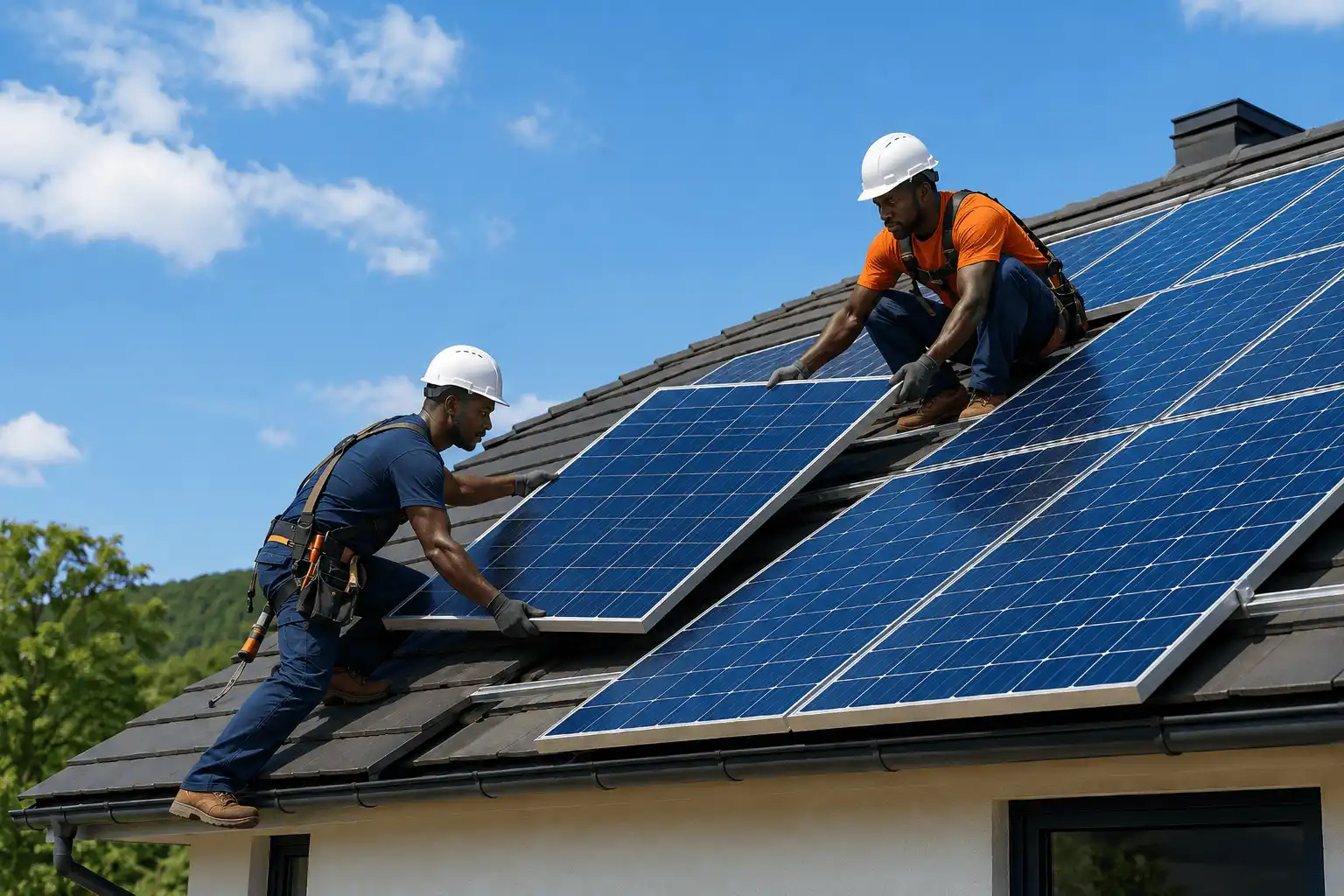
Solar panel installation in Nigeria involves five key stages — energy audit, system design, component procurement, physical installation, and commissioning. Professional installation labour in Nigeria costs ₦150,000 to ₦800,000 depending on system size and location, while installation, mounting, wiring, and protection devices can add ₦330,000 to ₦1,550,000 to the total system cost depending on roof type and complexity. Total installed costs range from ₦850,000 to ₦1,200,000 for a basic starter system suitable for lights, fans, televisions, and laptop charging all the way to ₦12,000,000 or more for large 4 to 5 bedroom homes. The process typically takes 1 to 3 days for residential systems once components are on site.

1. Load Audit ──► 2. Roof Assessment ──► 3. Structural Racking ──► 4. DC/AC Wiring ──► 5. CommissioningThis complete guide walks you through every step of solar panel installation in Nigeria — from your first energy audit to the final commissioning of your system. Whether you are a first-time buyer or planning to upgrade an existing system, this is everything you need to know before a single panel goes on your roof.
Looking for the full price of a working system (panels, inverter, batteries and installation together)? See our guide to the complete solar system cost in Nigeria. This page focuses on the installation process and labour costs.
What Is Solar Panel Installation?
Solar panel installation is the process of setting up a complete solar power system on your property — including mounting solar panels on your roof or ground, connecting them to an inverter, wiring in a battery bank, and commissioning the entire system to power your home or business.
A properly installed solar system in Nigeria consists of:
- Solar panels — mounted on your roof, capturing sunlight
- Inverter — converts solar DC power to AC electricity your appliances can use
- Battery bank — stores electricity for use at night or during cloudy days
- Charge controller (MPPT) — manages the flow of power between panels and batteries
- Wiring, cables, fuses, and circuit breakers — safe electrical connection between all components
- Mounting system — brackets, rails, and bolts that hold panels securely to your roof
Solar Panel Installation Cost in Nigeria 2026
This is the first question every Nigerian asks. Solar system pricing in Nigeria depends on system capacity, battery size, component quality, roof complexity, and location. Because most components are imported, exchange rate movements also influence final quotes.
Here is a full breakdown by system size:
Starter System — 1kVA to 2kVA
Suitable for lights, fans, televisions, and laptop charging. Total installed cost: ₦850,000 to ₦1,200,000.
| Component | Estimated Cost (₦) |
|---|---|
| Solar panels (2–4 x 300W–400W) | ₦180,000 – ₦460,000 |
| 1.5kVA – 2kVA Hybrid Inverter | ₦120,000 – ₦250,000 |
| 1 x 200Ah Battery | ₦155,000 – ₦350,000 |
| Wiring, cables, protection devices | ₦30,000 – ₦80,000 |
| Installation labour | ₦50,000 – ₦150,000 |
| Total | ₦535,000 – ₦1,290,000 |
Many starter systems now use two 550W panels instead of four smaller ones, which gives a 1.1kW array with less wiring and fewer roof fixings. Our 1000W solar panel price in Nigeria guide compares the options.
Standard Home System — 3kVA to 5kVA
Best for fridge, pumping machine, more lighting and fans, and sometimes a small AC. Installed cost: ₦2,000,000 to ₦3,000,000.
| Component | Estimated Cost (₦) |
|---|---|
| Solar panels (6–10 x 400W–550W) | ₦540,000 – ₦1,550,000 |
| 3kVA – 5kVA Hybrid Inverter | ₦350,000 – ₦900,000 |
| 5kWh–10kWh Lithium Battery | ₦700,000 – ₦2,148,000 |
| Mounting, wiring, protection | ₦80,000 – ₦300,000 |
| Installation labour | ₦100,000 – ₦350,000 |
| Total | ₦1,770,000 – ₦5,248,000 |
Large Home System — 7kVA to 10kVA
Best for 4 to 5 bedroom homes, multiple ACs, refrigerators, and freezers simultaneously. Total installed cost: ₦5,000,000 to ₦12,000,000.
Where the Money Goes — Cost Breakdown by Component
Understanding what each component costs helps you review quotes intelligently and avoid being overcharged:
Solar panels represent approximately 25 to 30% of your total system cost. Current panel prices range from ₦45,000 to ₦250,000 depending on wattage and brand, with monocrystalline panels offering higher efficiency at ₦60,000 to ₦250,000.
| Component | Share of Total Cost |
|---|---|
| Solar Batteries | 35% – 45% |
| Solar Panels | 25% – 30% |
| Inverter & Charge Controller | 20% – 25% |
| Installation Labour | 10% – 15% |
| Accessories & Protection | Under 5% |
In 2026, N-Type TOPCon panels have become the preferred choice for professional installations, costing about 20% more than older monocrystalline models but producing around 30% more energy in hot conditions — a meaningful advantage in Nigeria’s climate. Dominant brands in the Nigerian market include Jinko, Canadian Solar, Trina, and LONGi, all of which carry 25-year performance warranties.
Still deciding on panel type? Our comparison of monocrystalline vs polycrystalline solar panels in Nigeria explains why mono panels cope better with Nigerian heat.
Step-by-Step Solar Panel Installation Process in Nigeria
Here is exactly what happens from the moment you decide to go solar to the day your system goes live:
Step 1 — Energy Audit (Day 1)
Before any component is purchased, a professional installer should conduct an energy audit of your home or business. Your solar provider will conduct an energy audit to assess your power needs. For example, a household in Lagos with heavy appliance usage may require a 5kW system, while a rural home with basic lighting needs may only need 1kW.
What the energy audit covers:
- A full list of every appliance in your home with wattage and daily usage hours
- Your total daily energy consumption in kilowatt-hours (kWh)
- Peak load — the maximum power you need at any one moment
- Assessment of your roof for panel placement, shading, and structural suitability
You can do a rough audit yourself: List every appliance, its wattage, and hours of daily use. Multiply wattage by hours to get daily watt-hours. Divide by 1,000 for kWh. Add everything up. This gives your daily energy requirement and guides the system size you need.
Step 2 — System Design and Quotation (Day 1–2)
Based on your energy goals and budget, the installer designs a customised system. This includes selecting the right solar panels, inverter, batteries, and charge controller.
A good system design document from your installer should specify:
- Number and wattage of solar panels
- Inverter brand, model, and kVA rating
- Battery type, brand, capacity (Ah or kWh), and number of units
- Charge controller brand and MPPT rating
- Cable sizes, fuse ratings, and circuit breaker specifications
- Estimated daily energy generation
- Estimated backup hours
Always get three quotes. Compare not just the total price — compare the specific brands and models of every component. Some installers reduce quotes by using cheaper batteries or lower-quality panels without telling you.
Step 3 — Roof Assessment
Your roof plays a critical role in solar efficiency and safety. In Lagos and coastal regions, corrosion resistance and wind load considerations are especially important. Solar panels require maximum sunlight to perform efficiently. In Africa, particularly Nigeria, solar potential is high, but urban shading in cities like Lagos can reduce efficiency if not properly evaluated.
What installers check on your roof:
- Roof type — Flat concrete, corrugated iron sheets, and aluminum roofing all require different mounting approaches
- Structural strength — Can your roof support the weight of panels and mounting hardware?
- Shading — Trees, neighbouring buildings, and water tanks that cast shade on panels significantly reduce output
- Orientation — In Nigeria, south-facing roofs get the most solar exposure year-round
- Available space — How many panels can physically fit on your roof?
Roof type affects installation cost. Concrete and flat roofs are easiest and cheapest to install on. Corrugated iron sheet roofs require reinforcement and are moderately more expensive.
For rack materials, roof fittings, tilt angles and current prices, see our guide to solar panel rack prices in Nigeria.
Step 4 — Component Procurement
Once the system design is approved and payment is made, the installer procures all components. This typically takes 2 to 7 days depending on whether components are in stock locally or need to be ordered.
What to ask your installer during procurement:
- Confirm the exact brand and model of every component before delivery
- Ask to see the panel serial numbers — these can be verified on the manufacturer’s website
- Ensure the inverter comes with original packaging and warranty card
- Confirm battery type is LiFePO4 if you agreed on lithium
Step 5 — Physical Installation (Day 1–3 on Site)
This is where the physical work happens. A typical residential solar installation in Nigeria takes 1 to 3 days on site.
Day 1 — Mounting the Panels
- Installers mark out panel positions on the roof
- Mounting rails and brackets are bolted to the roof structure
- Solar panels are secured to the mounting rails
- Panels are connected together in series or parallel strings depending on system design
Day 2 — Inverter, Battery, and Wiring
- The inverter is wall-mounted in a cool, ventilated indoor location — typically a store room, utility room, or dedicated solar room
- Battery bank is set up next to or below the inverter
- DC cables are run from roof panels down to the inverter
- AC cables are run from the inverter to your main distribution board (DB board)
- Charge controller is connected between panels and batteries (on off-grid systems)
- Fuses, circuit breakers, and surge protection devices are installed
Day 3 — Testing and Commissioning
- All connections are checked and torqued to specification
- The system is powered on and tested for output voltage, charge current, and battery state
- The installer confirms the system is switching correctly between solar, battery, and grid power (hybrid systems)
- You are given a walkthrough on how to monitor and operate your system
Step 6 — Commissioning and Handover
A professional installer should provide:
- System commissioning report — confirming all components are working to specification
- Warranty documents — for each component (panels, inverter, batteries)
- Monitoring app setup — most modern hybrid inverters from Growatt, Deye, and Felicity have smartphone monitoring apps
- Maintenance guide — what to check and when
- Installer contact — for after-sales support and warranty claims
For outdoor or compound lighting, a standalone solar street light is often simpler than running cables from your main system, because each unit has its own panel and battery. See current solar street light prices in Nigeria.
How to Choose a Solar Installer in Nigeria
The success of your solar investment heavily depends on selecting the right installation company. Here is what to look for:
✅ Check for Certification
Ask if the installer is certified by the Nigerian Electricity Regulatory Commission (NERC) or is a member of the Solar Energy Society of Nigeria (SESN). Certified installers are trained in safe electrical practices and system design.
✅ Ask for Previous Installations
Request photos or contact details of previous customers. A reputable installer should have a portfolio of completed residential and commercial installations in Nigeria.
✅ Check Their Warranty Terms
A good installer should offer at least 12 months workmanship warranty on installation quality — separate from the manufacturer warranties on individual components.
✅ Verify Component Brands
Never let an installer substitute cheaper components without your knowledge. Always confirm the exact brand and model of panels, inverter, and batteries before signing off on a quote.
✅ Avoid Suspiciously Low Quotes
Solar installation costs vary across Nigeria due to transportation costs in remote areas, local availability of components in major cities like Lagos, Abuja, and Port Harcourt, installation expertise, and the regulatory environment of different states. If a quote is significantly lower than others for the same system size, something has been compromised — usually battery quality or panel grade.
Solar Installation Cost by City in Nigeria
Prices vary between Nigerian cities due to transport costs and local availability of installers:
| City | Cost Premium vs Lagos | Notes |
|---|---|---|
| Lagos | Base price | Most competitive — largest installer market |
| Abuja | +5% – 10% | Good availability, slightly higher labour |
| Port Harcourt | +5% – 15% | Good market, humid conditions need corrosion-resistant mounting |
| Kano | +10% – 20% | Good sun, but transport adds cost |
| Enugu | +10% – 20% | Growing market, fewer certified installers |
| Remote / rural | +20% – 40% | Transport and logistics significantly higher |
Government Incentives for Solar Installation in Nigeria
Check if you qualify for the Nigeria Electrification Project (NEP) subsidies, which can reduce installation costs by up to 15%. Additional programmes worth researching before installation include:
- Rural Electrification Fund (REF) — supports off-grid solar installations in rural communities
- Solar Power Naija initiative — government programme to increase solar access across Nigeria
- State-level incentive programmes — some state governments offer renewable energy incentives. Contact your state energy commission for current programmes.
How Long Does Solar Installation Take in Nigeria?
| System Size | On-Site Installation Time |
|---|---|
| 1kVA – 2kVA Starter | 1 day |
| 3kVA – 5kVA Standard Home | 1–2 days |
| 7kVA – 10kVA Large Home | 2–3 days |
| 10kVA+ Commercial | 3–7 days |
How to Maintain Your Solar System After Installation
Proper maintenance extends the life of your solar system and protects your investment:
Monthly:
- Visually inspect panels for cracks, bird droppings, or heavy dust accumulation
- Clean panels with a soft cloth and clean water early in the morning before they get hot
Every 3 months:
- Check all cable connections for corrosion or loosening
- Top up distilled water in tubular batteries (lithium batteries need no maintenance)
- Check the inverter display for any error codes or warning alerts
Annually:
- Have a certified installer inspect the mounting hardware for corrosion or loosening
- Check roof penetration points for water leaks
- Download and review your monitoring app data for any unusual patterns in generation or consumption
Dust accumulation can lower panel efficiency. Regular cleaning is essential to keep your system operating at full capacity. During Harmattan season in Nigeria — November to March — dust settles significantly on panel surfaces. Clean your panels more frequently during this period.
Solar Installation — Common Questions Nigerians Ask
Q: How much does solar panel installation cost in Nigeria in 2026? Solar panel installation costs in Nigeria range from ₦850,000 for a basic 1kVA starter system to over ₦12,000,000 for a large 10kVA home system. The most common size for a 3-bedroom home — a 3kVA to 5kVA system — costs between ₦2,000,000 and ₦4,500,000 fully installed.
Q: How long does solar installation take in Nigeria? A standard residential solar installation in Nigeria takes 1 to 3 days on site once all components have been procured. Procurement typically takes 2 to 7 additional days.
Q: Can I install solar panels myself in Nigeria? You can install small off-grid systems yourself. However, for full home systems with inverters and batteries, always use a certified installer. Incorrect wiring can damage your equipment, void warranties, and create a serious fire risk.
Q: Do I need a permit to install solar in Nigeria? For urban areas like Lagos and Abuja, permits may be required before installation, particularly for large commercial systems. For standard residential installations, permits are not commonly required but it is always worth checking with your local government before installation.
Q: How long before solar installation pays for itself in Nigeria? Despite high upfront costs, solar systems in Nigeria typically achieve payback within 2 to 4 years. After the payback period, your electricity is essentially free for the remaining 20+ years of the system’s life.
Q: What is the best inverter brand for solar installation in Nigeria? For most Nigerian homes, Felicity Solar, Growatt, and Deye offer the best combination of performance, local support, and compatibility with Nigerian conditions. For premium commercial installations, Victron Energy is the professional installer’s choice.
Q: How do I verify a solar installer is legitimate in Nigeria? Ask for their NERC certification number, request a portfolio of previous installations, confirm they provide component warranty documentation, and check their company registration. Never pay full payment upfront — a 50% deposit with balance on commissioning is standard practice for reputable Nigerian installers.
Summary — Solar Panel Installation in Nigeria 2026
| System Size | What It Powers | Installed Cost (₦) | Installation Time |
|---|---|---|---|
| 1kVA – 2kVA | Lights, fans, TV, charging | ₦850,000 – ₦1,200,000 | 1 day |
| 3kVA – 5kVA | Full home + fridge + pump | ₦2,000,000 – ₦4,500,000 | 1–2 days |
| 7kVA – 10kVA | Large home + ACs | ₦5,000,000 – ₦12,000,000 | 2–3 days |
| Commercial | Full business | ₦8,000,000+ | 3–7 days |
Related Articles on Solar Energy Supply Stores
- [How Much Does a Complete Solar System Cost in Nigeria?]
- [Solar Panel Prices in Nigeria 2026 — Complete Price List]
- [Best Solar Inverter in Nigeria — 2026 Buyer’s Guide]
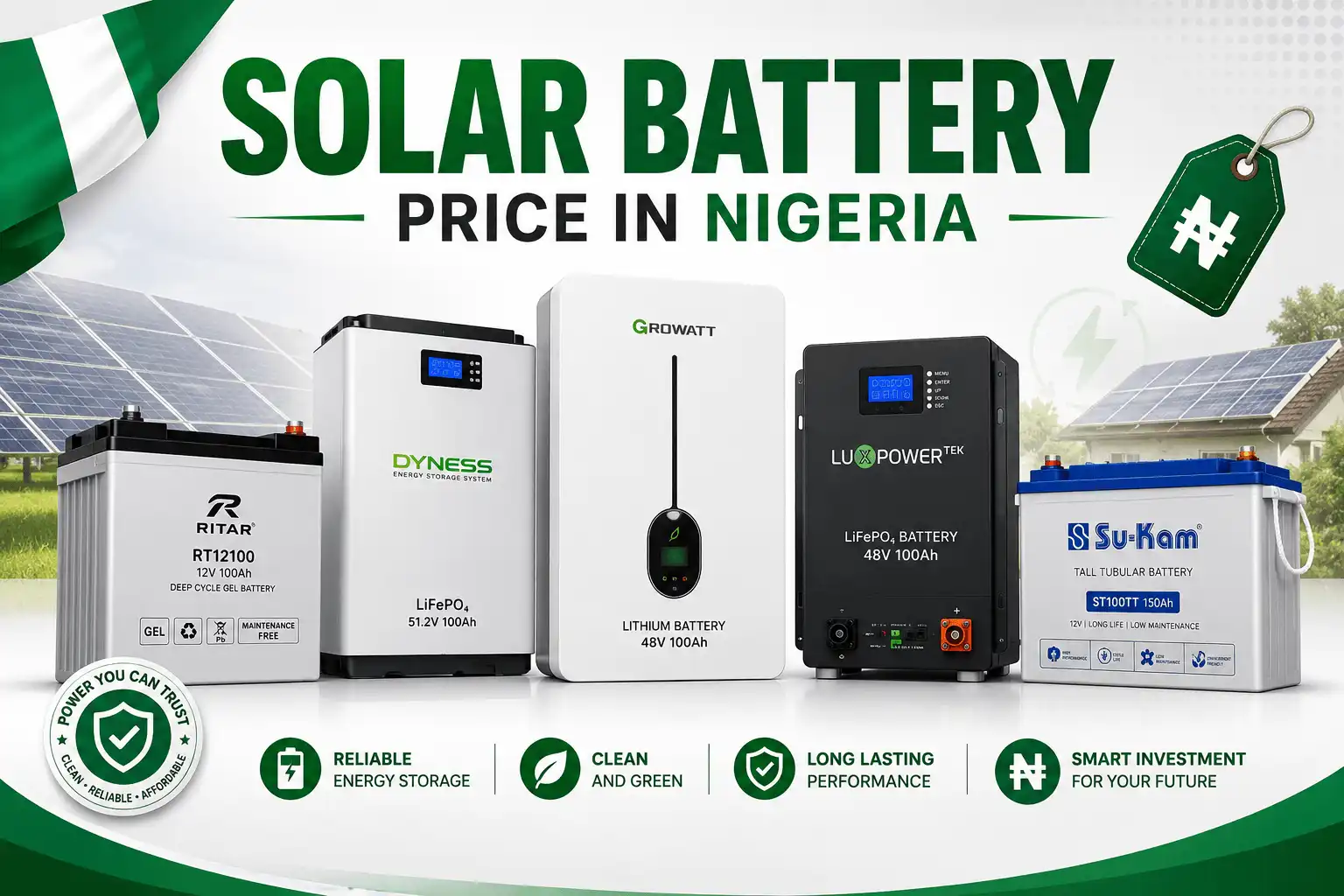
- [Solar Battery Price in Nigeria — Complete Buyer’s Guide]
This guide is based on current Nigerian market conditions and professional solar installation practices as of June 2026. Installation costs vary by location, system size, and component brands. Always get multiple quotes from certified installers before committing. Last updated: June 2026.

Leave a Reply


- Trending
- Latest
- Comments





Solar Energy Supply Stores provides current solar prices in Nigeria, expert product reviews, comparisons, and practical buying guides for solar panels, inverters, batteries, generators, and complete solar systems nationwide.
Comments 4