No products in the cart.


Best Solar Inverter in Nigeria (2026): The Complete Buyer’s Guide for Homes & Businesses
If you are searching for the best solar inverter in Nigeria right now, you are in the right place. After years of helping Nigerian homes and businesses build reliable solar power systems, we have tested, installed, and reviewed more inverters than we can count — and this guide gives you everything you need to choose the right one without making a costly mistake.

This guide covers:
- The best solar inverter brands in Nigeria with honest pros and cons
- Which inverter is right for your home size
- Prices in Naira (₦) for 2026
- What to look for before you buy
- Frequently asked questions
What Is a Solar Inverter and Why Does It Matter?
A solar inverter is the brain of your solar power system. It converts the DC (direct current) electricity generated by your solar panels into AC (alternating current) power that your appliances can use. Without an inverter, your solar panels are useless.
But not all inverters are equal — especially in Nigeria. The best solar inverter in Nigeria must handle:
- Unstable grid voltage from NEPA/Discos (low voltage, surges, and brownouts)
- Extreme heat and dust common in Nigerian environments
- Frequent deep discharge caused by extended power outages
- Heavy loads including air conditioners, water pumps, and freezers
Picking the wrong inverter means constant tripping, damaged batteries, failed appliances, and an expensive replacement within months. Picking the right one means 5 to 10 years of reliable power.
Types of Solar Inverters Available in Nigeria
Before comparing brands, you need to understand which type of inverter fits your situation.
String Inverter — Converts power from a string of solar panels connected in series. Best for rooftop systems with no shading and uniform panel layout. Less flexible but affordable.
Hybrid Inverter — The most popular choice in Nigeria. A hybrid inverter works with solar panels, batteries, and the grid simultaneously. It can blend solar and grid power to run heavy loads, charge batteries from solar during the day, and supply power from batteries at night. For most Nigerian homes, this is the best option.
Off-Grid Inverter — For locations with zero grid connection. Runs entirely on solar and batteries. Suitable for rural areas and remote properties.
Microinverter — Installed on each individual solar panel. Ideal for rooftops with shading or complex layouts. Expensive but maximises efficiency per panel.
For 95% of Nigerian homes and small businesses, a hybrid inverter is the best choice. It gives you maximum flexibility: use solar when available, draw from batteries at night, and fall back to grid only when needed — dramatically cutting your electricity bills and generator fuel costs.
The 10 Best Solar Inverter Brands in Nigeria (2026)
1. Victron Energy — Best for Premium and Mission-Critical Systems
Victron Energy from the Netherlands is widely regarded as the gold standard for solar inverters globally, and in Nigeria it is the top choice for hospitals, data centres, upscale homes, and any installation where downtime is simply not acceptable.
Why Nigerians trust it: Victron inverters are modular — if one component fails, you replace that part, not the whole unit. Their PowerAssist feature allows the inverter to supplement grid or generator power to run loads that would otherwise trip the system. They are virtually bulletproof under Nigerian conditions.
Best models: Victron MultiPlus-II, Victron Quattro, Victron EasySolar
Price range: ₦800,000 — ₦3,500,000+ depending on capacity
Pros: Exceptional build quality, modular design, industry-best warranty support, extensive monitoring via VictronConnect app
Cons: High price point, requires a skilled installer
Best for: Mission-critical installations, high-end residential, commercial, and off-grid systems
2. Sunsynk — Best Smart Hybrid Inverter for Nigerian Homes
Sunsynk has become one of the most talked-about hybrid inverter brands in Nigeria in recent years, and for good reason. It combines premium technology with a user-friendly touchscreen interface that shows you exactly where your power is coming from at any moment — solar, battery, or grid.
Why Nigerians trust it: The blending capability is exceptional. Sunsynk can run a heavy load by mixing solar power directly with grid power, meaning your 1.5HP inverter AC can run on solar without oversizing your battery bank. Its smart monitoring app is among the best available.
Best models: Sunsynk 3.6kW, Sunsynk 5kW, Sunsynk 8kW Hybrid
Price range: ₦600,000 — ₦2,000,000
Pros: Intuitive touchscreen display, powerful blending capability, excellent app monitoring, strong dealer network in Nigeria
Cons: Higher price than Chinese alternatives, firmware updates occasionally required
Best for: Modern homes running air conditioners, residential estates, tech-savvy buyers who want full system visibility
3. Deye — Best for Durability and Value
Deye is actually the original manufacturer (OEM) behind several premium hybrid brands — including Sunsynk — which tells you the technology inside is top-tier. Deye inverters are built tough and carry an IP65 rating on many models, making them water and dust-resistant. This is a significant advantage in the dusty, humid conditions found across Nigeria.
Why Nigerians trust it: You get near-Sunsynk performance at a noticeably lower price point. Deye inverters handle Nigeria’s harsh conditions well and are widely available through solar distributors in Lagos and Abuja.
Best models: Deye 3.6kW Hybrid, Deye 5kW Hybrid, Deye 8kW Three-Phase
Price range: ₦500,000 — ₦1,600,000
Pros: IP65 dust and water resistance, strong build quality, lithium battery compatible, good MPPT efficiency
Cons: Customer support can be inconsistent, fewer local technicians compared to Luminous
Best for: Homes and small businesses that want hybrid performance without paying premium European prices
4. Growatt — Best for Solar-First Homes and Small Businesses
Growatt is one of the world’s largest inverter manufacturers and has built a strong reputation in Nigeria’s residential and small commercial market. Their inverters are sleek, compact, and designed to maximise solar harvesting — making them ideal if your goal is to reduce NEPA dependence as much as possible.
Why Nigerians trust it: Growatt’s MPPT algorithms are among the most efficient available, meaning your solar panels generate more usable power throughout the day. Their monitoring app (ShinePhone) is excellent, and their hybrid ecosystem — inverter, batteries, and monitoring — works seamlessly together.
Best models: Growatt SPF 3000TL HVM, Growatt MIN 3000TL-XH, Growatt MOD Series
Price range: ₦400,000 — ₦1,400,000
Pros: Excellent solar harvesting efficiency, great monitoring app, widely available, modular capacity upgrades possible
Cons: Some models have had firmware issues, not all models support high-capacity lithium batteries
Best for: Solar-focused residential installations, small businesses wanting to cut electricity bills, buyers planning gradual system expansion
5. Luminous — Best for Reliability, Serviceability, and Budget Buyers
Luminous is a household name in Nigeria. While the brand is famous for its simple backup inverters, their Solar Hybrid range (including the Solarverter Pro) brings proper solar capability at a price point accessible to most Nigerian families.
Why Nigerians trust it: Every solar technician in Nigeria knows how to install and fix a Luminous inverter. Spare parts are available in every major market — Alaba, Computer Village, Trade Fair, and beyond. Their grid tolerance is specifically designed for countries with bad electricity: Luminous inverters charge well even when NEPA voltage is low or fluctuating.
Best models: Luminous Solarverter Pro 3.5kVA, Luminous NXG 1800, Luminous Solar Hybrid 7.5kVA
Price range: ₦280,000 — ₦900,000
Pros: Extremely easy to service, wide spare parts availability, excellent grid tolerance, trusted brand name
Cons: Lower efficiency than premium hybrid brands, older UI compared to Sunsynk/Growatt
Best for: Budget-conscious buyers, areas without easy access to specialist technicians, anyone prioritising long-term serviceability
6. Felicity Solar — Best Entry-Level Hybrid for Transitioning Buyers
Felicity Solar occupies a sweet spot in Nigeria’s market: hybrid inverter technology at a price point that smaller homes and businesses can actually afford. Felicity uses low-frequency transformer-based designs on many models, which makes them excellent at absorbing the shocks and surges from Nigeria’s unstable grid voltage.
Why Nigerians trust it: Felicity inverters are widely stocked in Alaba International Market and regional trade markets nationwide, making them easy to source and replace. For buyers transitioning away from generators who cannot yet afford premium European brands, Felicity is often the best starting point.
Best models: Felicity 3kVA Hybrid, Felicity 5kVA Hybrid, Felicity High PV Voltage Inverter
Price range: ₦250,000 — ₦750,000
Pros: Affordable hybrid entry point, strong grid surge absorption, wide market availability
Cons: Heavier than transformer-less designs, limited smart monitoring features, quality consistency can vary
Best for: First-time solar buyers, homes in areas with extreme voltage instability, budget hybrid setups
7. Must Solar — Best All-in-One Compact Solution
Must Solar offers all-in-one inverter solutions that combine the inverter, MPPT solar charge controller, and battery charger in a single compact unit. This simplifies installation significantly — less wiring, less wall space, fewer points of failure.
Why Nigerians trust it: For straightforward installations in homes or small shops, Must Solar’s all-in-one design reduces both installation cost and complexity. They are a solid mid-tier option for buyers who want decent hybrid performance without the complexity of multi-component systems.
Best models: Must Solar PV18-3024 VPK, Must Solar PH18 Series
Price range: ₦300,000 — ₦900,000
Pros: All-in-one design reduces installation complexity, compact footprint, decent MPPT efficiency
Cons: Fewer advanced features than Growatt or Sunsynk, limited upgrade path
Best for: Small homes, shops, and offices wanting a clean, simple installation
8. SRNE — Best for Tech-Savvy Installers and Engineers
SRNE (Shenzhen Renewable Energy) has built a loyal following among Nigerian solar engineers and professionals who want advanced features at competitive prices. SRNE inverters offer pure sine wave output, advanced MPPT controllers, and real-time LCD monitoring as standard.
Why Nigerians trust it: SRNE’s hybrid capability allows seamless switching between grid, battery, and solar — with excellent battery management that extends battery lifespan. Professionals who understand solar systems appreciate the depth of configuration options available.
Best models: SRNE HF4830U60-100, SRNE 5kW Hybrid
Price range: ₦350,000 — ₦1,100,000
Pros: Advanced features for the price, strong MPPT performance, comprehensive LCD display, hybrid flexibility
Cons: Less known brand name can affect resale value, requires a knowledgeable installer
Best for: Installers and engineers, buyers with an experienced solar technician, those building customised systems
9. Huawei — Best for Large Residential and Commercial Grid-Tied Systems
Huawei‘s solar inverter division (FusionSolar) is a global leader in efficiency and monitoring technology. In Nigeria, Huawei inverters are primarily seen in well-designed large residential and commercial systems — particularly where grid-tied or structured hybrid solutions are required.
Why Nigerians trust it: Huawei’s monitoring platform is among the best in the world, offering granular data on panel performance, battery state, and energy consumption. Their AI-powered MPPT optimisation means more solar energy harvested over the lifetime of the system.
Best models: Huawei SUN2000 Series, Huawei LUNA2000 Battery System
Price range: ₦700,000 — ₦4,000,000+
Pros: World-class monitoring, exceptional MPPT efficiency, strong global warranty support
Cons: Geopolitical concerns over Chinese technology in critical infrastructure, requires authorised installer
Best for: Large homes, commercial buildings, estates, and projects where monitoring and long-term performance data matter
10. Mercury — Best Local Brand for Nigerian Homes
Mercury is a Nigerian-market-focused brand that has earned a strong reputation for designing inverters specifically for the conditions Nigerian users face. Their 3.5kVA and 5.5kVA models are among the most searched solar inverter products in Nigeria.
Why Nigerians trust it: Mercury inverters come with built-in MPPT solar charge controllers and are sized and priced specifically for the Nigerian market. Their after-sales support is locally accessible, and they are well-stocked across Nigerian distributors.
Best models: Mercury 3.5kVA Solar Hybrid, Mercury 5.5kVA Solar Hybrid, Mercury 11kVA PRO
Price range: ₦280,000 — ₦900,000
Pros: Nigeria-specific design, local after-sales support, competitive pricing, widely available
Cons: Smaller global brand footprint, fewer advanced features than international competitors
Best for: Nigerian homes wanting a locally-supported product with straightforward installation
Solar Inverter Prices in Nigeria (2026 Price Guide)
👉 Read our full guide: [Solar Inverter Price in Nigeria]
Prices vary by capacity, brand, and whether you are buying from an authorised dealer or the open market. Here is a realistic guide based on current Nigerian market pricing:
| Capacity | Budget Brand | Mid-Tier Brand | Premium Brand |
|---|---|---|---|
| 1.5kVA – 2kVA | ₦150,000 – ₦280,000 | ₦280,000 – ₦450,000 | ₦500,000 – ₦800,000 |
| 3.5kVA – 5kVA | ₦300,000 – ₦550,000 | ₦500,000 – ₦900,000 | ₦900,000 – ₦2,000,000 |
| 5kVA – 8kVA | ₦450,000 – ₦750,000 | ₦700,000 – ₦1,400,000 | ₦1,400,000 – ₦3,000,000 |
| 10kVA+ | ₦800,000 – ₦1,500,000 | ₦1,500,000 – ₦2,500,000 | ₦2,500,000 – ₦5,000,000+ |
Note: All-in-one solar inverter systems (inverter + charge controller + battery monitor) typically range from ₦350,000 to ₦1,400,000 for residential sizes. Premium and commercial systems can go significantly higher. Prices fluctuate with the Naira/Dollar exchange rate — always confirm current pricing with your supplier.
Which Solar Inverter Is Right for Your Home Size?
Not sure what capacity you need? Here is a simple guide based on typical Nigerian household loads:
1-bedroom flat or small apartment: A 1.5kVA to 2kVA inverter is typically sufficient for lights, fans, television, and a small fridge. Pair with 1 × 200Ah battery for 6–8 hours of backup.
2 to 3-bedroom home: A 3.5kVA hybrid inverter handles lights, fans, TV, fridge, and a water pump comfortably. Pair with 2 × 200Ah batteries. Step up to 5kVA if you run a 1HP air conditioner. Compare prices in our 3.5kVA and 5kVA inverter price guides.
4-bedroom home or home with 1.5HP inverter AC: A 5.5kVA to 7.5kVA hybrid inverter with 4 × 200Ah batteries (or 2 × 200Ah lithium) will handle a full household including air conditioning.
Small business, shop, or office: A 5kVA to 10kVA system depending on your loads. If you run multiple ACs or heavy equipment, get a load assessment done before buying. See our 10kVA inverter price guide for full-home and multi-AC setups.
General rule: Always size your inverter 20–30% above your calculated peak load. Under-sizing is the most common and most expensive mistake Nigerian buyers make.
7 Things to Check Before Buying a Solar Inverter in Nigeria
1. Pure Sine Wave Output
Always buy a pure sine wave inverter. Modified sine wave inverters are cheaper but they damage fridges, televisions, computers, and other sensitive electronics over time. Every reputable hybrid inverter in this guide produces pure sine wave output.
2. MPPT Solar Charge Controller
Ensure your inverter has a built-in MPPT (Maximum Power Point Tracking) charge controller — not PWM. MPPT extracts 20–30% more energy from your solar panels, especially during early morning, late afternoon, and cloudy conditions.
3. Grid Tolerance Range
Nigeria’s grid voltage is notoriously unstable — it can drop to 160V or spike above 250V. Your inverter should have a wide AC input range (typically 90V–280V) and still charge batteries without switching to generator mode unnecessarily.
4. Battery Compatibility
Check that your inverter supports the battery type you plan to use. Most inverters support sealed lead-acid (SLA), gel, and tubular batteries. For lithium (LiFePO₄) batteries — increasingly popular for their lifespan and weight — confirm explicit lithium compatibility and proper BMS communication.
5. Warranty and Local Support
The best solar inverter in Nigeria is one you can actually get serviced. A 2-year warranty means nothing if the brand has no local representative. Before buying, confirm there is a Nigerian distributor or authorised service centre — and ask specifically what the warranty claims process looks like.
6. Heat and Dust Tolerance
Nigerian environments are hot and dusty. Look for inverters with IP65 ratings (dust and water resistant) or at minimum good internal cooling and ventilation design. Mount your inverter on a wall with adequate breathing space — never inside a sealed cabinet.
7. Protect Against Fakes
The Nigerian market is unfortunately flooded with counterfeit inverters, especially popular brands like Luminous and Felicity. Always buy from an authorised dealer, check for manufacturer serial numbers, and verify authenticity through the brand’s official channels before payment.
Hybrid vs Off-Grid: Which Should You Choose in Nigeria?
Choose a hybrid inverter if:
- You have NEPA/Disco supply, even if it is unreliable
- You want to reduce electricity bills while maintaining grid backup
- You plan to gradually add solar panels and batteries over time
- You run heavy loads like air conditioners
Choose an off-grid inverter if:
- You have zero grid connection (rural property, remote location)
- Grid connection is available but completely unusable
- You want total energy independence with a large battery bank
For the vast majority of Nigerians living in cities and towns, a hybrid inverter is the correct choice. It gives you maximum flexibility and makes the most of whatever NEPA supply exists.
Inverter brand guides
- Deye inverter price and review
- Growatt inverter price and review
- Luminous inverter price in Nigeria
- Felicity Solar inverter prices
- Must inverter price and review
- Huawei inverter price and review
- Prag inverter price and review
- Yohako inverter price and review
- MTN solar inverter price and plans
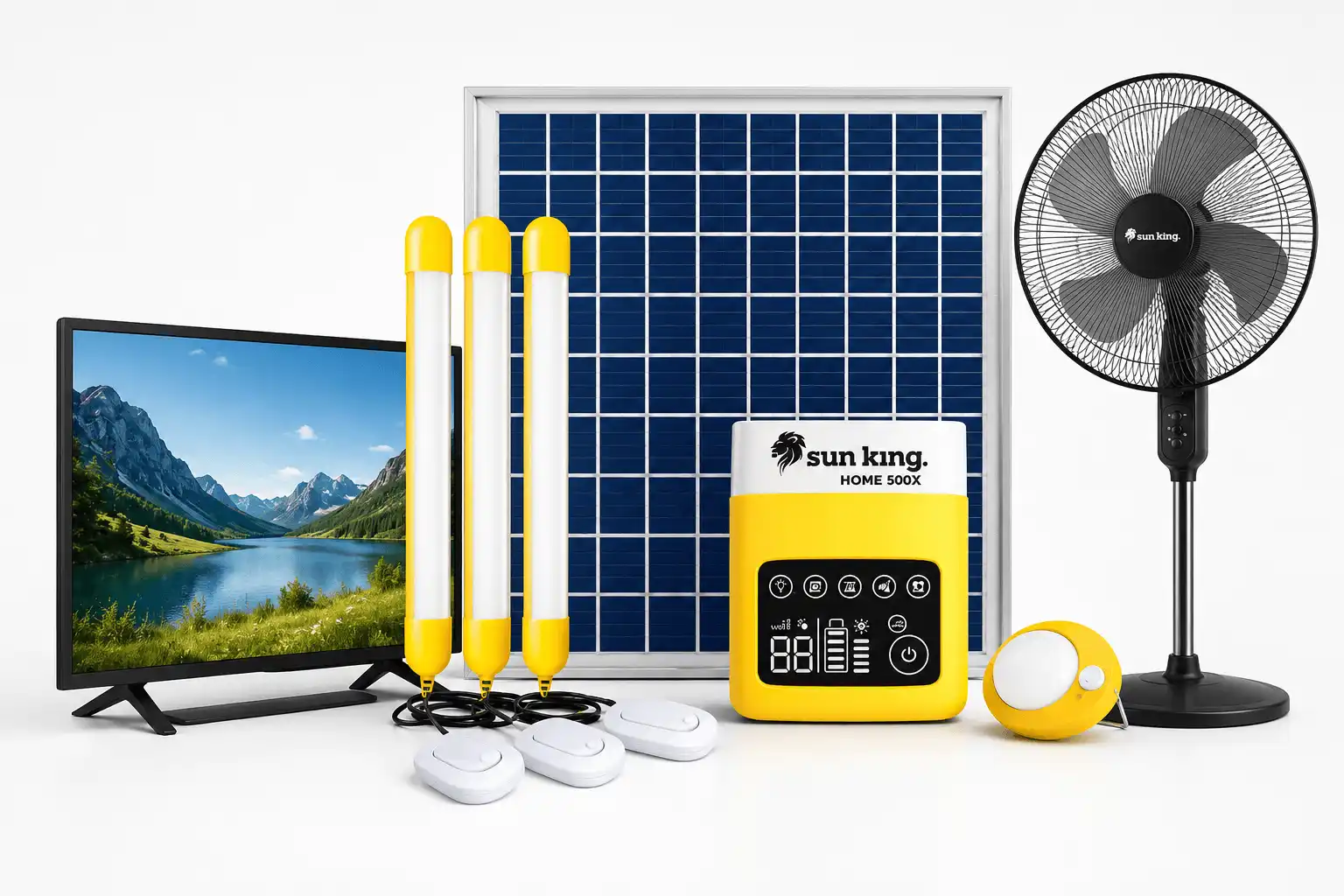
- SunKing solar systems and prices
Frequently Asked Questions
Which solar inverter is the best for a 3-bedroom home in Nigeria? For a typical 3-bedroom home in Nigeria running lights, fans, TV, fridge, and a water pump, the best solar inverter is a 3.5kVA to 5kVA hybrid inverter. Brands like Growatt, Deye, Sunsynk, and Luminous all offer strong options in this range. If you run an air conditioner, go with a minimum 5kVA system.
What is the best hybrid solar inverter in Nigeria in 2026? The best hybrid solar inverter in Nigeria in 2026 depends on your budget and priorities. For premium performance: Victron or Sunsynk. For the best balance of quality and value: Growatt or Deye. For the most serviceable and affordable: Luminous or Felicity Solar.
How long does a solar inverter last in Nigeria? A quality solar inverter correctly installed and maintained typically lasts 5 to 10 years in Nigerian conditions. Heat, dust, and undersized wiring are the main factors that shorten inverter lifespan. Proper ventilation, correct cable sizing, and buying an original product significantly extend longevity.
Can a solar inverter run an air conditioner in Nigeria? Yes — but you need the right size. A 1HP (0.75kW) inverter-type air conditioner requires at minimum a 3.5kVA hybrid inverter with adequate solar panel capacity. A 1.5HP AC requires at least a 5kVA system. Non-inverter ACs have much higher startup surge requirements — always verify before connecting.
What is the solar inverter price range in Nigeria in 2026? Solar inverter prices in Nigeria in 2026 range from approximately ₦150,000 for small entry-level units to over ₦5,000,000 for large commercial hybrid systems. For a complete home system (3.5kVA to 5kVA hybrid inverter with batteries and panels), expect to budget ₦1,200,000 to ₦3,500,000 depending on battery capacity and solar panel array size.
Is Victron the best solar inverter in Nigeria? Victron Energy is the best solar inverter in Nigeria for mission-critical and premium installations. It is not the most affordable option, but for reliability, durability, and long-term value, nothing in the Nigerian market consistently outperforms Victron. For budget-conscious buyers, Growatt or Luminous offer excellent value at a fraction of the price.
Where can I buy original solar inverters in Nigeria? Buy from authorised distributors, verified online solar stores, or directly from manufacturer-certified dealers. Avoid open market purchases of premium brands without verifying authenticity. Solar Energy Supply Store stocks original, warranty-backed inverters from all major brands with nationwide delivery across Nigeria.
Final Verdict: The Best Solar Inverter in Nigeria for Every Buyer
There is no single “best” solar inverter in Nigeria — it depends entirely on your home size, budget, loads, and priorities. Here is a quick summary to help you decide:
- Best overall for most Nigerian homes: Growatt or Deye (5kVA hybrid) — excellent balance of performance, smart monitoring, and price
- Best premium pick: Victron Energy or Sunsynk — unmatched reliability and features for buyers who want the best
- Best value for tight budgets: Luminous or Felicity Solar — widely available, easy to service, designed for Nigerian conditions
- Best for total energy independence: Victron off-grid system with large lithium battery bank
- Best local Nigerian brand: Mercury — locally supported, Nigeria-specific design
Whatever you choose, prioritise pure sine wave output, MPPT charging, a wide grid tolerance range, and always buy from an authorised dealer with a verifiable warranty.
Need help choosing the right solar inverter for your home or business? Contact Solar Energy Supply Store today — our team of solar experts will assess your load requirements and recommend the perfect system for your needs and budget.
Tags: best solar inverter in Nigeria, solar inverter brands Nigeria, hybrid solar inverter Nigeria, solar inverter prices Nigeria 2026, Victron inverter Nigeria, Growatt inverter Nigeria, Sunsynk inverter Nigeria, Luminous solar inverter Nigeria, solar inverter for home Nigeria, best inverter for 3-bedroom home Nigeria


Leave a Reply


- Trending
- Latest
- Comments




Solar Energy Supply Stores provides current solar prices in Nigeria, expert product reviews, comparisons, and practical buying guides for solar panels, inverters, batteries, generators, and complete solar systems nationwide.
Comments 7