No products in the cart.


Monocrystalline vs Polycrystalline Solar Panels in Nigeria
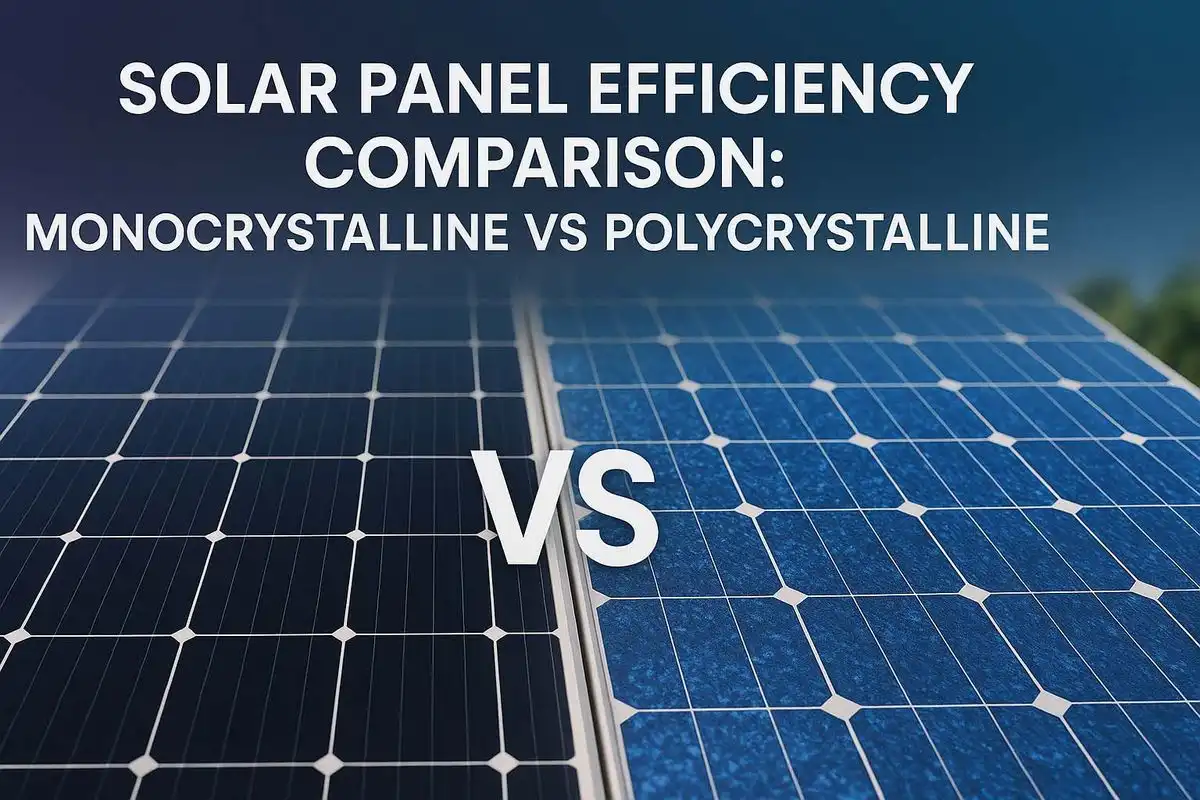
When shopping for solar panels in Nigeria, one of the first questions you will encounter is: should I buy monocrystalline or polycrystalline panels?

Both types convert sunlight into electricity using silicon cells. But the differences between them — in efficiency, heat performance, price, and lifespan — matter a great deal in Nigeria’s specific climate and conditions. This guide gives you a clear, honest comparison so you can make the right decision for your home or business before spending a single naira.
What Is a Monocrystalline Solar Panel?
A monocrystalline solar panel is made from a single, pure crystal of silicon. During manufacturing, silicon is grown into one large crystal and then sliced into thin wafers used to make the solar cells.
Because the silicon is a single uniform crystal, electrons can flow through it more freely — which is why monocrystalline panels are more efficient at converting sunlight into electricity.
How to identify a monocrystalline panel:
- The cells are black or very dark blue
- The corners of each cell are cut, giving them an octagonal shape
- The panel surface looks uniform and dark
Efficiency in 2026: Monocrystalline panels now reach 19% to 24% efficiency, outperforming every other mainstream residential solar option.
What Is a Polycrystalline Solar Panel?
A polycrystalline solar panel is made from multiple silicon crystal fragments melted together. The manufacturing process is simpler and cheaper — but the resulting cells are less efficient because the multiple crystal boundaries restrict the free flow of electrons.
How to identify a polycrystalline panel:
- The cells are bright blue with a speckled, shimmering appearance
- The cells are square-shaped with no cut corners
- The surface looks uneven or mosaic-like
Efficiency in 2026: Polycrystalline panels maintain 15% to 18% efficiency — effective but significantly lower than monocrystalline panels.
Head-to-Head Comparison — Monocrystalline vs Polycrystalline
| Feature | Monocrystalline | Polycrystalline |
|---|---|---|
| Efficiency | 19% – 24% | 15% – 18% |
| Heat performance | ✅ Excellent | ⚠️ Poor |
| Low-light performance | ✅ Excellent | ⚠️ Average |
| Lifespan | 25 – 30 years | 20 – 25 years |
| Degradation rate | Under 0.5% per year | 0.5% – 0.7% per year |
| Price per panel | Higher | Lower |
| Space efficiency | ✅ Fewer panels needed | ⚠️ More panels needed |
| Appearance | Sleek black | Bright blue speckled |
| Availability in Nigeria | ✅ Widely available | Reducing fast |
The Most Important Factor for Nigeria — Heat Performance
This is where the decision is made for Nigerian buyers. Nigeria is a hot country. Temperatures in Lagos regularly hit 33°C to 38°C. In the North — Kano, Abuja, Maiduguri — temperatures exceed 40°C during the dry season.
Solar panels are tested at 25°C in factory conditions. When real-world temperatures exceed this, all panels lose efficiency — but monocrystalline and polycrystalline panels lose efficiency at very different rates.
Temperature coefficient measures how much power a panel loses for every degree above 25°C:
| Panel Type | Temperature Coefficient | Power Loss at 40°C Nigeria |
|---|---|---|
| Monocrystalline | -0.3% to -0.4% per °C | 4.5% – 6% power loss |
| Polycrystalline | -0.4% to -0.5% per °C | 6% – 7.5% power loss |
In plain terms: on a hot Nigerian afternoon when temperatures reach 40°C — which is 15°C above test conditions — a polycrystalline panel loses significantly more power output than a monocrystalline panel. Over a full year of Nigerian weather, this difference adds up to thousands of naira in lost energy production.
Monocrystalline panels have a lower temperature coefficient and work well in heat. Polycrystalline panels have a higher temperature coefficient, meaning they experience a more significant drop in efficiency as temperatures rise. This makes monocrystalline the clear winner for Nigeria’s hot climate.
Price Comparison in Nigeria 2026
Monocrystalline panels cost more upfront. Here is the realistic price gap in the Nigerian market:
| Panel Type | 300W Price (₦) | 400W Price (₦) | 550W Price (₦) |
|---|---|---|---|
| Polycrystalline | ₦50,000 – ₦60,000 | ₦80,000 – ₦95,000 | Not commonly available |
| Monocrystalline | ₦60,000 – ₦78,000 | ₦95,000 – ₦115,000 | ₦115,000 – ₦155,000 |
| Price difference | ₦10,000 – ₦18,000 | ₦15,000 – ₦20,000 | — |
The price gap between monocrystalline and polycrystalline panels in Nigeria has been narrowing steadily. In 2026, the difference is around ₦10,000 to ₦20,000 per panel — a gap that is easily recovered through better performance over the life of the system.
Space Efficiency — Important for Nigerian Urban Homes
In cities like Lagos, Abuja, and Port Harcourt, roof space is often limited. Smaller townhouses, bungalows, and flats may not have room for many panels.
Because monocrystalline panels are more efficient, you need fewer of them to achieve the same total output:
| Target Output | Monocrystalline (400W) | Polycrystalline (300W) |
|---|---|---|
| 1,200W system | 3 panels | 4 panels |
| 2,400W system | 6 panels | 8 panels |
| 3,600W system | 9 panels | 12 panels |
For a homeowner in Lagos with a small roof, the ability to generate the same power with 3 panels instead of 4 is a significant practical advantage — reducing mounting hardware, wiring, and installation cost.
The gap is even clearer with modern high-wattage mono panels: two 550W monocrystalline panels give you a full 1kW array. See our 1000W solar panel price in Nigeria guide for what that costs.
Lifespan and Degradation in Nigerian Conditions
All solar panels degrade over time — they produce slightly less power each year. But the rate of degradation differs between panel types, and Nigeria’s hot, dusty conditions accelerate this.
- Monocrystalline panels degrade at under 0.5% per year. A 400W panel will still produce around 390W after 10 years.
- Polycrystalline panels degrade at 0.5% to 0.7% per year — meaning faster power loss, especially in Nigeria’s heat.
Over 25 years, choosing polycrystalline when monocrystalline would suit your situation better means higher installation costs due to needing more panels, faster degradation at 0.5% to 0.7% annually, lower output in high heat, and potentially shorter lifespan of 3 to 5 years less. The real impact over the life of a Nigerian solar system is suboptimal performance and earlier replacement cost.
Are Polycrystalline Panels Still Available in Nigeria?
Yes — but they are disappearing fast. In 2026, monocrystalline technology has become the default choice for most residential installations. Many leading manufacturers have reduced or completely phased out polycrystalline production in favour of more advanced monocrystalline, mono PERC, TOPCon, and N-type cells. Polycrystalline panels still exist but are more common in budget or second-hand markets.
In the Nigerian market specifically, most vendors and certified installers now stock predominantly monocrystalline panels. If you find someone selling a large stock of polycrystalline panels at unusually low prices, it is likely older inventory being cleared out. Buy with caution.
What About TOPCon and Bifacial Panels?
Beyond standard monocrystalline, there are two newer technologies now available in Nigeria worth knowing about:
TOPCon (Tunnel Oxide Passivated Contact) TOPCon is the newest monocrystalline technology. N-Type TOPCon panels cost 20% more than standard mono panels but produce 30% more energy in hot weather. They have better temperature coefficients — losing even less power on extremely hot Nigerian afternoons. For buyers who want the best long-term performance, TOPCon is the smart upgrade.
Bifacial Panels Bifacial panels generate power from both the front and back surfaces. They work best when mounted with adequate clearance above the roof to allow reflected light to reach the back of the panel. They cost the most but deliver the highest total energy yield. Best for commercial installations and large home systems.
For most Nigerian homes in 2026, standard monocrystalline is the right balance of price and performance. TOPCon is worth the premium for buyers who want maximum long-term output.
The Verdict — Which Is Better for Nigeria?
Monocrystalline panels are the clear winner for Nigeria in 2026.
Here is the honest summary:
✅ Choose Monocrystalline if:
- You have limited roof space — more power from fewer panels
- You live in a hot area — Lagos, Kano, Abuja, the North
- You want panels that last 25 to 30 years with minimal degradation
- You want the best long-term value per naira
- You are building a new solar system from scratch in 2026
⚠️ Polycrystalline might make sense only if:
- You have a very tight budget and cannot stretch to monocrystalline
- You have unlimited roof space and are not concerned about efficiency
- You are building a temporary or short-term solar setup
In almost every real-world Nigerian scenario, the ₦10,000 to ₦20,000 price difference per panel is worth paying for the better heat performance, higher efficiency, longer lifespan, and greater space efficiency that monocrystalline delivers.
Whichever panel type you choose, good mounting, tilt and wiring matter just as much as the cells. Our solar panel installation guide explains what a proper installation in Nigeria should include.
Frequently Asked Questions
Q: Which solar panel is best for Nigeria — monocrystalline or polycrystalline? Monocrystalline is the better choice for Nigeria. It handles high heat significantly better than polycrystalline, delivers higher efficiency, and lasts longer. The small price difference per panel is recovered through better performance in Nigeria’s hot climate.
Q: How do I identify a monocrystalline solar panel? Monocrystalline panels have dark black or very dark blue cells with cut corners giving them an octagonal shape. The surface looks uniform and sleek. Polycrystalline panels are bright blue with a speckled or mosaic appearance and square cells with no cut corners.
Q: Are polycrystalline panels still sold in Nigeria? Yes, but they are being phased out rapidly. Most vendors and certified installers in Nigeria now stock predominantly monocrystalline panels. Polycrystalline panels are more common in budget markets and second-hand sales.
Q: Is monocrystalline worth the extra cost in Nigeria? Yes. The price difference in Nigeria between monocrystalline and polycrystalline is approximately ₦10,000 to ₦20,000 per panel. Given that a monocrystalline panel generates more power in heat, degrades more slowly, and lasts 3 to 5 years longer, the extra cost is justified for any permanent home installation.
Q: What is the difference between monocrystalline and TOPCon panels? TOPCon panels are an advanced version of monocrystalline technology using N-type silicon cells. They cost about 20% more than standard monocrystalline panels but produce around 30% more energy in hot weather — making them ideal for Nigeria’s climate for buyers who want maximum performance.
Summary — Monocrystalline vs Polycrystalline for Nigeria
| Monocrystalline | Polycrystalline | |
|---|---|---|
| Better for Nigerian heat | ✅ Yes | ❌ No |
| Higher efficiency | ✅ Yes | ❌ No |
| Lower price | ❌ No | ✅ Yes |
| Better space efficiency | ✅ Yes | ❌ No |
| Longer lifespan | ✅ Yes | ❌ No |
| Widely available in Nigeria | ✅ Yes | ⚠️ Reducing |
| Our Verdict | ✅ Recommended | ⚠️ Budget only |
Related Articles on Solar Energy Supply Stores
- [Solar Panel Prices in Nigeria 2026 — Complete Price List]
- [How Much Does a Complete Solar System Cost in Nigeria?]
This article is based on current Nigerian market conditions and global solar panel research as of June 2026. Last updated: June 2026

Leave a Reply


- Trending
- Latest
- Comments







Solar Energy Supply Stores provides current solar prices in Nigeria, expert product reviews, comparisons, and practical buying guides for solar panels, inverters, batteries, generators, and complete solar systems nationwide.
Comments 1