No products in the cart.


What Size Solar Inverter Do I Need? (Sizing Chart)
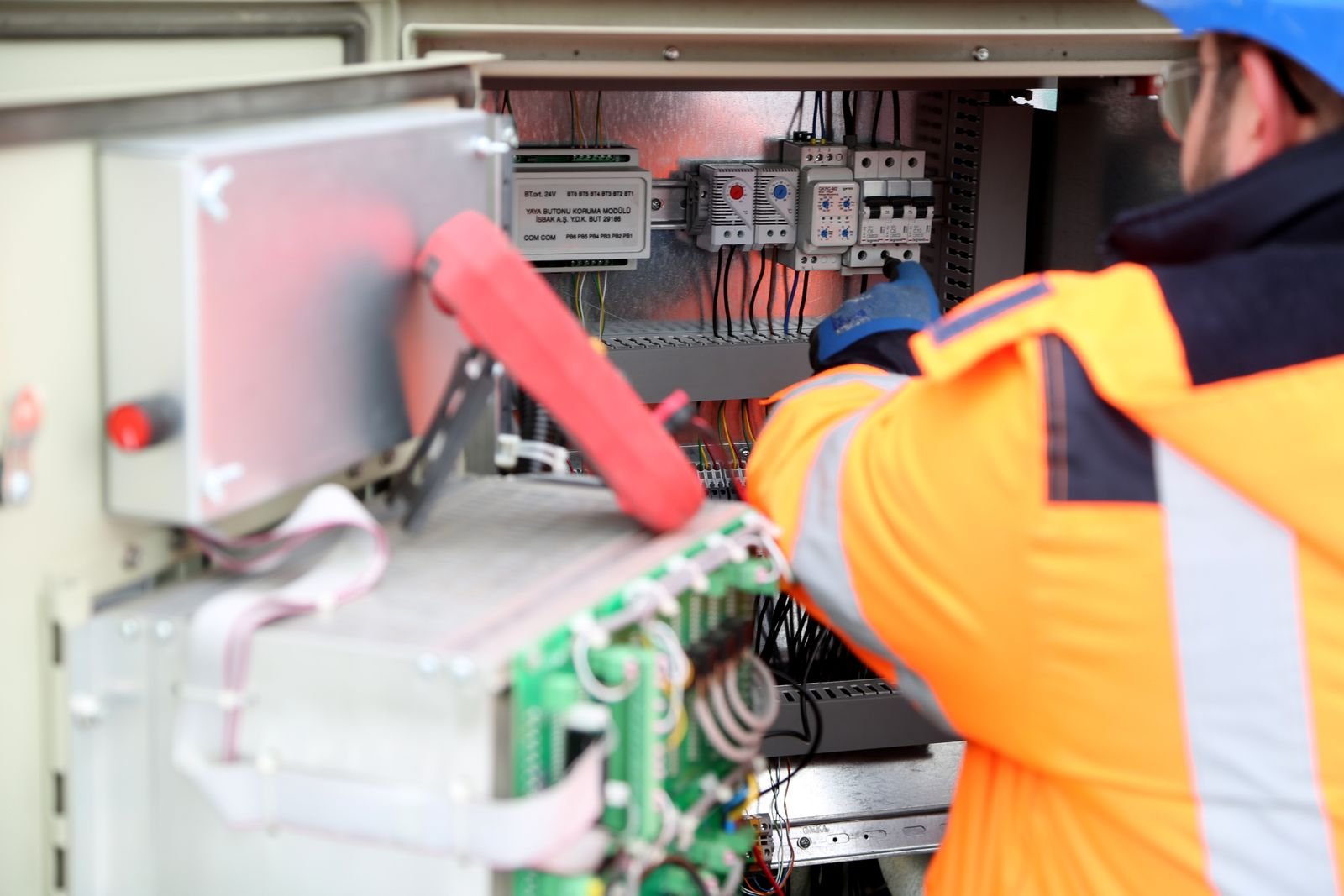
For a grid-tied home, choose an inverter rated at about 80% to 90% of your panel array’s DC size. That is a DC-to-AC ratio of about 1.1 to 1.25, so an 8 kW array usually pairs with a 6.5 kW to 7.6 kW inverter. For off-grid or backup systems, the rule is different. Size the inverter to the largest load you will run at once, add 25%, and make sure its surge rating can start your biggest motor.

Quick answer
- Grid-tied: inverter AC rating ≈ array DC size ÷ 1.1 to 1.25.
- Off-grid: largest combined running load × 1.25, rounded up.
- Surge: must cover motor start-up, often 2–3× running watts for pumps, fridges and AC.
- Battery voltage: 12 V for small loads, 24 V up to about 3 kW, 48 V for whole-home systems.
- US homes: you need 120/240 V split-phase output to run well pumps, dryers or central AC.
What does an inverter do in a solar system?
Solar panels make direct current (DC). Your home runs on alternating current (AC). The inverter converts one to the other. It also tracks the panels’ best operating point and, on grid-tied systems, shuts off during a power outage so line workers stay safe.
The right size depends on which type of system you have. Grid-tied systems are sized to the panels. Off-grid and backup systems are sized to your loads.
What is a good DC-to-AC ratio for a solar inverter?
The DC-to-AC ratio (also called the inverter loading ratio) compares panel capacity to inverter capacity. A 9 kW array on a 7.5 kW inverter has a ratio of 9 ÷ 7.5 = 1.2.
It seems odd to use a smaller inverter than the array, but it makes sense. Panels rarely hit their full rated output. Heat, dust, wiring losses and sun angle keep real output below the label most of the year. The EIA reports that most US solar projects use ratios between about 1.13 and 1.30. NREL’s PVWatts calculator uses 1.2 as its default.
On the few sunny, cool hours when the array could beat the inverter, the inverter caps output. This is called clipping. With a ratio near 1.2, the energy lost is usually small, and the smaller inverter costs less.
- Ratio 1.0–1.1: little clipping. Good for hot, hazy or east/west-facing roofs.
- Ratio 1.15–1.25: the common sweet spot for south-facing US roofs.
- Ratio above 1.3: more clipping. Check the inverter maker’s maximum DC input before going this high.
Grid-tied inverter sizing chart
Use this chart if you have a string inverter on a grid-tied system. Not sure how big your array should be? Start with our solar power calculator.
| Array size (DC) | Panels (400 W) | Inverter range (AC) | Ratio at 1.2 |
|---|---|---|---|
| 4 kW | 10 | 3.3–4.0 kW | 4 ÷ 1.2 = 3.3 kW |
| 6 kW | 15 | 5.0–6.0 kW | 6 ÷ 1.2 = 5.0 kW |
| 8 kW | 20 | 6.5–7.6 kW | 8 ÷ 1.2 = 6.7 kW |
| 10 kW | 25 | 8.0–10.0 kW | 10 ÷ 1.2 = 8.3 kW |
| 12 kW | 30 | 10.0–11.4 kW | 12 ÷ 1.2 = 10.0 kW |
What about microinverters?
With microinverters, each panel gets its own small inverter. You match each micro to the panel, not the whole array. Makers publish approved panel pairings, so a 400 W panel is often paired with a micro rated around 300 to 380 W AC. That is still a DC-to-AC ratio above 1.0. Follow the maker’s compatibility list.
What is the difference between surge watts and running watts?
This matters most for off-grid and battery backup systems. Running watts are what a device uses once it is on. Surge watts are the short spike when a motor or compressor starts. That spike can be two to three times the running watts, or more, for a fraction of a second.
If the inverter can’t supply the surge, it trips or the motor stalls. Always check the nameplate or manual for your actual numbers.
| Appliance | Running watts | Starting (surge) watts |
|---|---|---|
| Refrigerator | 150–250 W | 600–1,200 W |
| Window AC (10,000 BTU) | 800–1,200 W | 1,500–2,500 W |
| Well pump (1 HP, 240 V) | 1,000–1,500 W | 2,500–4,000 W |
| Microwave | 1,000–1,500 W | Same as running |
| Sump pump (1/2 HP) | 800–1,050 W | 1,300–2,200 W |
| LED lights (whole house) | 100–300 W | Same as running |
How do I size an off-grid inverter? (Worked example)
Say you have a cabin that may run these at the same time: a fridge (200 W), lights (150 W), a TV and Wi-Fi (100 W), a well pump (1,000 W) and a microwave (1,200 W).
- Add running watts: 200 + 150 + 100 + 1,000 + 1,200 = 2,650 W.
- Add a 25% margin: 2,650 W × 1.25 = 3,313 W. Round up to a 3.5 kW or 4 kW inverter.
- Check surge: the well pump starts at about 3,000 W while the other loads run at 1,650 W. 3,000 + 1,650 = 4,650 W of surge.
- Pick the inverter: a 4 kW unit with a surge rating of at least 5 kW for a few seconds. Many low-frequency inverters list 2× to 3× surge.
Because the pump runs on 240 V, this cabin also needs a 120/240 V split-phase inverter, or a step-up transformer. That is common in US homes and easy to miss.
The inverter only sets how much power you can draw at once. The battery and panels set how long you can run. For the rest of the design, see how many solar panels to power an off-grid house and how many solar batteries you need to run a house.
Grid-tie vs off-grid vs hybrid: which inverter do I need?
| Type | Works in a blackout? | How to size it | Best for |
|---|---|---|---|
| Grid-tie (string or micro) | No | Array DC ÷ 1.1 to 1.25 | Lowest cost, bill savings |
| Off-grid | Yes (no grid at all) | Peak load × 1.25, plus surge | Cabins, remote homes |
| Hybrid (battery-ready) | Yes, on backed-up circuits | Both: array input and backup load output | Outage backup plus savings |
A hybrid inverter must pass two checks. Its solar input must handle your array. Its battery output must cover the circuits you want backed up. Many homes back up only key loads like the fridge, lights, Wi-Fi and furnace fan. Running central AC on backup usually takes a larger inverter or more than one battery unit. Our solar-powered air conditioner guide shows the numbers, and our solar batteries guide compares common backup batteries.
What battery voltage should my inverter use?
Higher voltage means lower current for the same power. Lower current means thinner cables and less heat. A 3,000 W load at 12 V draws 3,000 ÷ 12 = 250 amps. At 48 V it draws 3,000 ÷ 48 = 62.5 amps.
- 12 V: up to about 1,500–2,000 W. Vans, RVs, sheds.
- 24 V: about 2,000–3,000 W. Small cabins.
- 48 V: 3,000 W and up. Homes and larger cabins.
Is a bigger inverter always better?
No. An oversized inverter costs more and uses more standby power, which matters on off-grid systems with small batteries. Some inverters draw 20 to 50 W just sitting idle. Over 24 hours, 40 W × 24 = 960 Wh, close to 1 kWh a day lost. Pick a size that covers your real peak with a sensible margin, not the biggest unit you can afford.
Running a pool pump? See how many solar panels it takes to run a pool pump, which covers motor surge in more detail.
Safety note
Inverters work with high DC voltage and 120/240 V AC. Grid-tied and hybrid systems need a permit, a utility interconnection agreement and an inspection in most of the US. Hire a licensed electrician for any grid-tied, hybrid or 120/240 V work. Installations must follow the National Electrical Code (NEC Articles 690 and 705) and your local permit rules.
Frequently asked questions
What size inverter do I need for a 10 kW solar system?
For grid-tied, about 8 kW to 10 kW AC. At a 1.2 ratio, 10 ÷ 1.2 = 8.3 kW, so an 8 kW to 8.5 kW inverter is common.
Can my inverter be bigger than my solar array?
Yes, and it is common in hybrid systems that also run from batteries. For grid-tie only, it usually just adds cost with little gain.
What size inverter runs a refrigerator?
A fridge alone runs on a 1,000 W pure sine wave inverter with at least 1,500 W of surge. Add the rest of your loads if they will run at the same time.
Do I need a pure sine wave inverter?
Yes, for a home. Motors, compressors and electronics run cooler and more reliably on pure sine wave power. Modified sine wave units are cheaper but best kept to simple loads.
Sources
- U.S. EIA: Solar inverter loading ratios
- NREL PVWatts Calculator (DC-to-AC ratio default)
- NFPA 70: National Electrical Code
Last updated: October 2026. Wattage figures are typical ranges; check your equipment labels and manuals. This article is for information only and is not electrical advice.



Leave a Reply


- Trending
- Latest
- Comments








Solar Energy Supply Stores provides current solar prices in Nigeria, expert product reviews, comparisons, and practical buying guides for solar panels, inverters, batteries, generators, and complete solar systems nationwide.
Comments 2