No products in the cart.


Do Solar Panels Work in Winter and Snow?
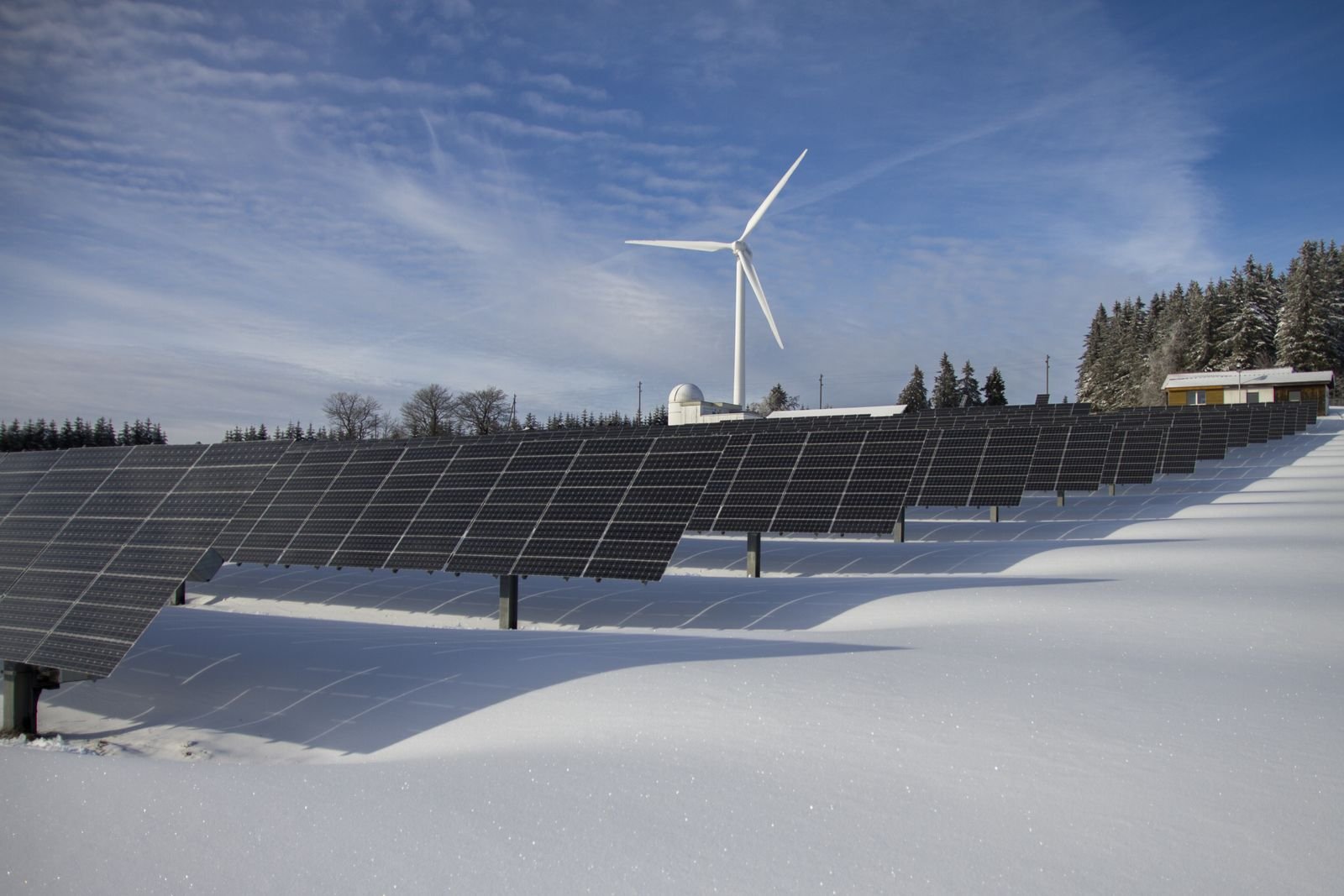
Yes, solar panels work in winter. Cold makes them slightly more efficient, but shorter days and low sun cut output. In a northern city like Minneapolis, a solar system makes about 35% as much power in December as in July (our estimate), and snow can trim another 0–16% a year, per NREL.

Quick answer
- Cold: helps. Panels lose output in heat and gain a little in cold.
- Low light: hurts. Short days and a low sun are the main reason winter output drops.
- Northern example: a 7 kW system near Minneapolis makes about 385 kWh in December vs. about 1,085 kWh in July (our estimates).
- Snow: a light layer often slides off within a day or two of sun. NREL modeling shows annual snow losses of 0–16% for fixed systems in the lower 48.
- Clearing snow: usually not needed. Never climb an icy roof to do it.
Do solar panels work in cold weather?
Yes, and cold is actually good for them. Solar panels are rated at a cell temperature of 77°F (25°C). Above that, output drops. Below it, output rises a little.
The change is set by the panel’s temperature coefficient. For most modern panels, it is about −0.3% to −0.4% per °C. Here is the math for a 400 W panel with cells at 32°F (0°C) and a coefficient of −0.35%:
- 25°C − 0°C = 25°C cooler than the rating
- 25 × 0.35% = 8.75% more output than rated, in the same light
- 400 W × 1.0875 = about 435 W peak
In real life, sunlit cells run warmer than the air, so the gain is smaller. Still, a crisp, clear, 20°F day can give some of the sharpest peaks of the year. Cold is not the problem. Darkness is.
Why do solar panels produce less in winter?
Three things stack up in winter, especially in the northern US:
- Shorter days. Minneapolis gets about 9 hours of daylight in late December, versus about 15.5 in late June.
- Lower sun angle. Sunlight passes through more air and hits the panels at a sharper angle, so less energy lands on each square foot.
- More clouds and snow. Gray weeks and snow cover cut output further.
The US average is about 1,350 kWh per kW of panels per year, but northern states land lower and swing more by season. Southern states see a much smaller winter dip.
How much power do solar panels make in winter? (Minneapolis example)
To show the seasonal swing, we estimated monthly output for a 7 kW, south-facing, fixed rooftop system in Minneapolis, Minnesota. We used PVWatts-style assumptions: standard panels, 14% system losses, and a tilt near 35°. These are our estimates, not an official NREL run, and they do not include snow losses. Run NREL’s PVWatts with your own address for real numbers.
| Month | kWh per kW (est.) | 7 kW system (est. kWh) | % of July |
|---|---|---|---|
| January | 75 | 525 | 48% |
| February | 95 | 665 | 61% |
| March | 125 | 875 | 81% |
| April | 135 | 945 | 87% |
| May | 150 | 1,050 | 97% |
| June | 150 | 1,050 | 97% |
| July | 155 | 1,085 | 100% |
| August | 140 | 980 | 90% |
| September | 115 | 805 | 74% |
| October | 95 | 665 | 61% |
| November | 65 | 455 | 42% |
| December | 55 | 385 | 35% |
| Year | 1,355 | 9,485 | — |
The worked math for December:
- 7 kW × 55 kWh per kW = 385 kWh
- 385 kWh ÷ 31 days = about 12.4 kWh a day
- The average US home uses about 865 kWh a month (EIA, 2024). 385 ÷ 865 = about 45% of a typical month’s use
In July, the same system makes 1,085 kWh, more than the average home uses. That summer surplus is what makes the year work.
Is solar worth it in cold, snowy states?
Often, yes, if you look at the whole year. With net metering that carries credits month to month, extra summer output can offset winter bills. A 7 kW system making about 9,485 kWh a year covers roughly 91% of an average home’s 10,380 kWh (865 × 12).
The value depends on your utility’s export rules and your electric rate. Use our solar power calculator to size a system, and check solar panel cost for 2026 prices.
Off-grid homes are different. They can’t bank summer power with the grid, so they must be sized for the darkest month. That often means close to twice the panels, plus more battery. See how many solar panels to power an off-grid house.
Do solar panels work with snow on them?
Not well. A thick layer blocks light, and output can drop to near zero. A thin dusting lets some light through. The good news: snow usually doesn’t stay long.
- Panels shed snow. Smooth, dark glass warms in the sun, and snow slides off a tilted surface.
- Steeper is better. Panels tilted 35° or more clear faster than flat or low-tilt arrays.
- Snow reflects light. Once panels are clear, snow on the ground can bounce extra light onto them.
How much does snow cost you over a year? NREL modeling found annual snow losses of 0% to 16% for fixed-tilt systems in the continental US. Most of that loss falls in months that produce little anyway.
Heavy snow is a load question, too. Many panels are tested to about 5,400 Pa (about 113 lb per sq ft) of front load. Check your panel’s spec sheet, and have your installer confirm your roof and racking meet local snow-load codes.
Should you remove snow from solar panels?
Usually not. The power you gain is small, and the risks are real. If you do clear them:
- Stay on the ground. Use a soft foam roof rake made for solar panels. Never climb an icy roof.
- No metal tools or hard scrapers. They scratch glass and can void the warranty.
- No hot water. Sudden heat on cold glass can crack it.
- Leave a thin layer. The sun will finish the job.
- Watch for sliding snow. Snow can dump off panels all at once. Keep walkways clear below.
Read your panel maker’s warranty rules first. For year-round care, see how to clean solar panels safely.
How can you get more solar power in winter?
- Tilt for winter on ground mounts you can adjust. A steeper angle catches the low sun and sheds snow.
- Trim trees that cast long winter shadows.
- Shift loads like laundry and dishwashing to midday.
- Add storage if outages are common. Winter storms are a top reason northern homeowners add solar batteries.
Long winter nights also mean more hours with no solar at all. See do solar panels work at night? for what powers your home after dark.
Frequently asked questions
Can solar panels freeze or break in cold weather?
Panels are built for outdoor use and are commonly rated to operate down to about −40°F. Cold alone won’t break them. Hail and heavy snow loads are bigger concerns, and quality panels are tested for both.
Do solar panels work on cloudy winter days?
Yes, but output is low, often 10–25% of a clear day. Gray weeks are the main reason December and January totals are so small in the north.
Do solar panels melt snow on their own?
Not directly, but sun warms the dark glass through thin snow. That loosens the bottom layer, and the snow slides off the tilted surface.
Which month is worst for solar in the northern US?
Usually December, with November and January close behind. Those months have the shortest days and the most snow and cloud.
Sources
- NREL PVWatts Calculator
- NREL: Integration, Validation, and Application of a PV Snow Coverage Model in SAM (2017)
- EIA: Average residential electricity use and bills (2024)
Last updated: October 2026. Monthly output figures are our estimates; run PVWatts for your address. Clearing snow from a roof can be dangerous. This article is for information only and is not electrical advice.





Leave a Reply


- Trending
- Latest
- Comments







Solar Energy Supply Stores provides current solar prices in Nigeria, expert product reviews, comparisons, and practical buying guides for solar panels, inverters, batteries, generators, and complete solar systems nationwide.