No products in the cart.


How Many Solar Panels for a 1,500 Sq Ft House?
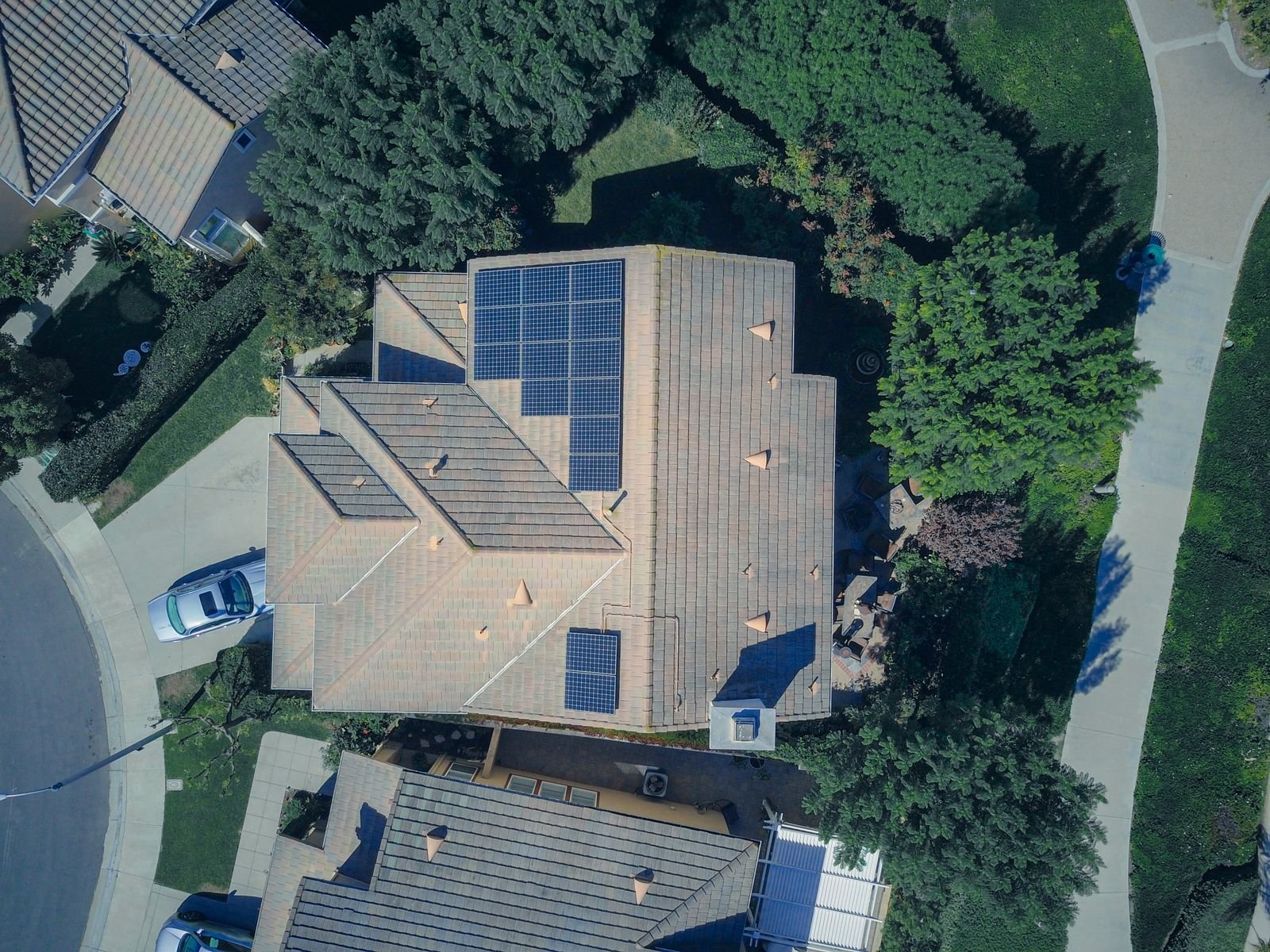
Most 1,500 sq ft houses need about 17 to 23 solar panels rated at 400 watts, or a 7 kW to 9 kW system. About 20 panels is a good starting point for an average US home. Your real number depends on your electric bill, not your floor space. A sunny Arizona home may need 15 panels, while a Northeast home with electric heat may need 25 or more.

Quick answer
- Typical panel count: 17–23 panels at 400 W (about 20 for an average home).
- System size: about 7–9 kW for 850–1,100 kWh a month.
- Roof space: about 360–480 sq ft of panel area (21 sq ft per panel).
- Cost: about $18,000–$23,000 installed at the 2026 average of $2.60 per watt.
- Biggest factor: your yearly kWh use, then your local sun hours.
Want a number for your own bill? Try our solar power calculator.
How much electricity does a 1,500 sq ft house use?
The average US home used about 865 kWh a month in 2024, according to the U.S. Energy Information Administration (EIA). That is about 10,380 kWh a year. A 1,500 sq ft house sits close to that average, but region matters a lot.
Homes in the South run air conditioning for much of the year, so they use more. Homes in the Northeast and West often use less, unless they heat with electricity. A pool pump, an electric car or a heat pump can add hundreds of kWh a month.
The best number to use is your own. Look at the last 12 months of bills and add up the kWh. Most utilities show this in your online account. Floor space is only a rough guide.
| Region | Typical use (1,500 sq ft) | Yearly use | Output per kW per year | System size | 400 W panels |
|---|---|---|---|---|---|
| Northeast | 700 kWh/month | 8,400 kWh | 1,100 kWh | 7.6 kW | 19 |
| Midwest | 850 kWh/month | 10,200 kWh | 1,250 kWh | 8.2 kW | 21 |
| South / Southeast | 1,050 kWh/month | 12,600 kWh | 1,400 kWh | 9.0 kW | 23 |
| Southwest | 750 kWh/month | 9,000 kWh | 1,600 kWh | 5.6 kW | 15 |
How do peak sun hours change the panel count?
Peak sun hours are the number of hours a day when sunlight equals 1,000 watts per square meter. Most of the US gets 4 to 6. Each extra sun hour means each panel makes more power, so you need fewer of them.
A home in Phoenix (about 6.5 sun hours) can need around 30% fewer panels than the same home in Seattle (about 3.5). That is why the Southwest row in the table above has the smallest system, even though summer AC use is high.
For a quick check of your own area, try our solar power calculator. It lets you pick sun hours by state and change panel wattage.
How do you calculate the number of panels? (Worked example)
Here is the math for an average home using 865 kWh a month. We use the US rule of thumb of 1,350 kWh per kW of panels per year.
- Find yearly use: 865 kWh × 12 months = 10,380 kWh a year.
- Find system size: 10,380 kWh ÷ 1,350 kWh per kW = 7.7 kW.
- Convert to watts: 7.7 kW × 1,000 = 7,700 W.
- Divide by panel size: 7,700 W ÷ 400 W = 19.25, so round up to 20 panels.
- Check the roof: 20 panels × 21 sq ft = 420 sq ft.
- Estimate cost: 20 × 400 W = 8,000 W × $2.60 = $20,800 before any local rebates.
You can also work from daily use and sun hours. 10,380 kWh ÷ 365 days = 28.4 kWh a day. With 5 sun hours and 20% system losses, each kW makes 5 × 0.8 = 4 kWh a day. So 28.4 ÷ 4 = 7.1 kW, or 18 panels. The two methods land close together, which is a good sign.
How many panels do you need by panel wattage?
Higher-wattage panels mean fewer panels and less roof space. The total system size stays the same. Here is the same 7.7 kW target with different panels.
| Panel wattage | Math (7,700 W ÷ panel W) | Panels needed | Approx. roof area |
|---|---|---|---|
| 300 W | 7,700 ÷ 300 = 25.7 | 26 | About 460–470 sq ft |
| 350 W | 7,700 ÷ 350 = 22.0 | 22 | About 430–440 sq ft |
| 400 W | 7,700 ÷ 400 = 19.25 | 20 | About 420 sq ft |
| 450 W | 7,700 ÷ 450 = 17.1 | 18 | About 400–410 sq ft |
| 500 W | 7,700 ÷ 500 = 15.4 | 16 | About 400 sq ft |
Note that total roof area barely drops with bigger panels. Higher-wattage panels are physically larger. The main benefit is fewer parts to mount and wire.
How much roof space does a 1,500 sq ft house have for solar?
A single-story 1,500 sq ft house often has 1,700 to 2,000 sq ft of roof, once you count overhangs and pitch. A two-story house of the same size has about half that.
Not all of it is usable. Installers skip north-facing slopes, shaded areas and space around vents and chimneys. Many local fire codes also require clear paths of about 18 to 36 inches along ridges and edges. As a rough guide, plan on 30% to 50% of the roof being usable.
- Single story: 1,800 sq ft roof × 40% usable = 720 sq ft. That fits 34 panels, which is plenty.
- Two story: 900 sq ft roof × 40% usable = 360 sq ft. That fits about 17 panels, which may fall short.
If the roof is tight, higher-efficiency panels help a little. A ground mount, a carport array or cutting your use with LED lights and a heat pump water heater can help more.
How much do solar panels cost for a 1,500 sq ft house?
At the 2026 US average of about $2.60 per watt (EnergySage), the cost lines up like this:
- 6 kW (15 panels): 6,000 W × $2.60 = $15,600
- 8 kW (20 panels): 8,000 W × $2.60 = $20,800
- 9.2 kW (23 panels): 9,200 W × $2.60 = $23,920
The 30% federal tax credit (Section 25D) ended for home systems placed in service after December 31, 2025. So these are close to what you would pay, unless your state or utility offers a rebate. See our full solar panel cost guide for prices by system size.
To estimate savings, multiply the kWh you offset by your rate. At the 2026 average of 18.2¢ per kWh, a system covering 10,380 kWh saves about 10,380 × $0.182 = $1,889 a year. Actual savings depend on your utility’s net metering rules.
Do you need batteries, or can you go off-grid?
The numbers above are for a grid-tied system. The grid acts as your backup at night and on cloudy days. Most homes do not need batteries to save money.
Going fully off-grid is a different design. You size for the worst winter month and add days of battery storage, which often doubles the panel count. Our guide on how many solar panels to power an off-grid house walks through that math. If you want backup power during outages, see how many solar batteries it takes to run a house and our solar batteries guide.
You will also need an inverter matched to your array. Our post on what size solar inverter you need covers that.
Frequently asked questions
Is 20 solar panels enough for a 1,500 sq ft house?
For an average home using about 865 kWh a month, yes. Twenty 400 W panels make about 8 kW, which produces roughly 10,800 kWh a year at average US sun. Homes in hot or cloudy climates may need more.
What size solar system does a 1,500 sq ft house need?
Usually 7 kW to 9 kW. Sunny Southwest homes may need as little as 5.5 to 6 kW. All-electric homes in cloudy areas may need 10 kW or more.
Does a bigger house always need more panels?
No. Panel count follows electricity use, not square feet. A well-insulated 2,000 sq ft home with gas heat can use less power than a drafty 1,500 sq ft home with electric heat.
How long does it take to pay off solar on a 1,500 sq ft house?
At about $20,800 for 8 kW and about $1,900 a year in savings, simple payback is roughly 11 years. Higher electric rates or local rebates shorten it. Poor net metering terms lengthen it.
Sources
- U.S. EIA: Average residential electricity use, 2024
- NREL PVWatts Calculator (solar output by location)
- EnergySage: Solar panel cost data
Last updated: October 2026. Figures are estimates based on national averages; get quotes from local installers for your home. This article is for information only and is not financial advice.



Leave a Reply


- Trending
- Latest
- Comments








Solar Energy Supply Stores provides current solar prices in Nigeria, expert product reviews, comparisons, and practical buying guides for solar panels, inverters, batteries, generators, and complete solar systems nationwide.
Comments 3