No products in the cart.


Solar Panel Price in Nigeria
Solar Panel Price in Nigeria 2026: Current Price List & Buying Guide
The solar panel price in Nigeria varies considerably depending on the wattage, brand, solar-cell technology, efficiency, warranty and where you buy it. In 2026, buyers can find small solar panels for less than ₦20,000, while high-capacity 550W, 600W and 650W monocrystalline panels can cost well above ₦100,000 per panel.

For most Nigerian homes, offices and businesses building modern solar installations, 400W to 650W monocrystalline panels have become increasingly popular because they provide more generating capacity while using fewer panels and less roof space.
However, the cheapest solar panel is not always the best value. Two panels with the same wattage may have very different prices because of differences in efficiency, cell technology, product quality, warranty and manufacturer.
This guide provides an updated solar panel price list in Nigeria, including prices for 100W, 200W, 300W, 400W, 450W, 550W and 650W solar panels. We also compare popular brands such as Jinko Solar, Canadian Solar, LONGi, Trina Solar, JA Solar and Felicity Solar.
Important: The prices below are market estimates rather than fixed retail prices. Solar panel prices in Nigeria can change because of exchange rates, import costs, availability, location and seller pricing. Always confirm the current price and exact model before making payment.
How Much Is a Solar Panel in Nigeria in 2026?
Solar panels in Nigeria can cost anywhere from approximately ₦6,000 for very small low-wattage panels to ₦200,000 or more for high-capacity premium panels.
For the wattages commonly used in residential and commercial solar installations, expect approximately:
| Solar Panel Wattage | Estimated Price in Nigeria |
|---|---|
| 100W Solar Panel | ₦20,000 – ₦35,000 |
| 150W Solar Panel | ₦30,000 – ₦45,000 |
| 200W Solar Panel | ₦34,000 – ₦65,000 |
| 300W Solar Panel | ₦50,000 – ₦85,000 |
| 350W Solar Panel | ₦75,000 – ₦103,000 |
| 400W Solar Panel | ₦90,000 – ₦115,000 |
| 450W Solar Panel | ₦95,000 – ₦130,000 |
| 500W Solar Panel | ₦100,000 – ₦150,000 |
| 550W Solar Panel | ₦115,000 – ₦165,000 |
| 600W Solar Panel | ₦140,000 – ₦185,000 |
| 620W–650W Solar Panel | ₦155,000 – ₦200,000+ |
These prices should be used as a buying benchmark, not as a fixed quotation.
A 550W Jinko N-Type panel, for example, may cost more than an unknown 550W brand even though both carry the same 550W power rating.
That is why buyers should compare the exact model, technology, efficiency, warranty and authenticity rather than looking at wattage alone.
Solar Panel Price List in Nigeria by Wattage
Below is a broader solar panel price list covering small, medium and high-capacity panels available in the Nigerian market.
| Wattage | Estimated Price Range |
|---|---|
| 10W | ₦6,000 – ₦15,000 |
| 20W | ₦9,500 – ₦18,000 |
| 30W | ₦14,500 – ₦20,000 |
| 50W | ₦14,900 – ₦22,000 |
| 80W | ₦16,500 – ₦28,000 |
| 100W | ₦20,000 – ₦35,000 |
| 120W | ₦25,000 – ₦32,000 |
| 150W | ₦30,000 – ₦45,000 |
| 200W | ₦34,000 – ₦65,000 |
| 300W | ₦50,000 – ₦85,000 |
| 350W | ₦75,000 – ₦103,000 |
| 400W | ₦90,000 – ₦115,000 |
| 450W | ₦95,000 – ₦130,000 |
| 500W | ₦100,000 – ₦150,000 |
| 550W | ₦115,000 – ₦165,000 |
| 600W | ₦140,000 – ₦185,000 |
| 620W–650W+ | ₦155,000 – ₦200,000+ |
Prices can be lower when buying several panels in bulk and higher when purchasing from premium retailers offering stronger warranties, technical support or nationwide delivery.
100W Solar Panel Price in Nigeria
The 100W solar panel price in Nigeria is approximately ₦20,000 to ₦35,000.
100W panels are mainly suitable for small off-grid applications rather than large household installations.
They may be useful for:
- Charging small batteries
- LED lighting
- CCTV and security systems
- Small DC fans
- Telecommunications equipment
- Kiosks
- Small recreational or mobile solar systems
For a new residential installation where roof space is limited, using several 100W panels is usually less practical than using fewer high-wattage panels.
200W Solar Panel Price in Nigeria
A 200W solar panel in Nigeria generally costs approximately ₦34,000 to ₦65,000, depending on the technology and manufacturer.
This size can work well for relatively small solar applications and as part of smaller arrays.
Before purchasing, check whether the panel is monocrystalline or polycrystalline and compare its physical dimensions, voltage, current and efficiency with the requirements of your solar equipment.
300W Solar Panel Price in Nigeria
The 300W solar panel price in Nigeria generally falls between ₦50,000 and ₦85,000.
You can still find 300W panels from brands such as Felicity and other manufacturers, although many newer residential installations now use panels above 400W.
A 300W panel may still be attractive when:
- The purchase price is competitive
- You already have matching panels
- Your charge controller or inverter configuration suits the panel
- Roof space is not a major limitation
- You are expanding an older installation
400W Solar Panel Price in Nigeria
A 400W solar panel in Nigeria typically costs around ₦90,000 to ₦115,000.
400W-class panels provide a good balance between physical size and power output and can be used for residential, office and small commercial installations.
However, always check the voltage and current specifications before adding a new 400W panel to an existing array.
Mixing panels with significantly different electrical characteristics can reduce performance or create design problems.
450W Solar Panel Price in Nigeria
The 450W solar panel price in Nigeria is approximately ₦95,000 to ₦130,000.
450W panels are widely suitable for modern residential solar arrays because they generate considerably more rated power per panel than older 200W and 300W modules.
Their relatively high wattage also means fewer panels may be required to achieve a given array capacity.
500W Solar Panel Price in Nigeria
Expect a 500W solar panel to cost approximately ₦100,000 to ₦150,000.
Prices vary according to whether the panel uses conventional monocrystalline, Mono-PERC, half-cell, bifacial or newer N-Type technology.
At this level, it becomes especially important to compare price per watt rather than simply comparing the price of each physical panel.
550W Solar Panel Price in Nigeria
The 550W solar panel price in Nigeria is one of the most searched solar-panel prices because 550W-class modules are widely used in modern residential and commercial installations.
Expect approximately:
₦115,000 – ₦165,000 per 550W panel
Premium branded models may cost more.
Popular manufacturers with panels around this capacity include:
- Jinko Solar
- Canadian Solar
- LONGi Solar
- Trina Solar
- JA Solar
A major advantage of a 550W panel is that you can build a relatively powerful solar array with fewer individual modules.
For example, ten 550W panels have a combined nameplate capacity of approximately 5.5kW.
This does not mean they will constantly produce 5.5kW throughout the day. Actual output changes with sunlight intensity, temperature, orientation, shading, dirt and other conditions.
600W to 650W Solar Panel Price in Nigeria
High-capacity 600W to 650W solar panels generally cost approximately ₦140,000 to ₦200,000+.
These high-output modules are increasingly attractive where buyers want to maximize generating capacity while reducing the total number of panels required.
They can be particularly useful for:
- Large homes
- Commercial buildings
- Offices
- Schools
- Hospitals
- Hotels
- Factories
- Farms
- Large rooftop installations
However, bigger is not automatically better.
High-wattage panels can also be physically larger and heavier, so roof dimensions, mounting structure and inverter electrical limits must be considered before purchasing.
Solar Panel Prices in Nigeria by Brand
Brand is another major factor influencing the cost of solar panels in Nigeria.
Established manufacturers usually command higher prices because buyers are paying not only for the wattage but also for manufacturing consistency, technology, documented specifications, product testing, traceability and warranty support.
Jinko Solar Panel Price in Nigeria
Jinko Solar is one of the well-known solar module manufacturers available in Nigeria.
The company produces several panel technologies and capacities, including its Tiger and Tiger Neo ranges.
Indicative Nigerian prices include:
| Jinko Panel | Estimated Price |
|---|---|
| 350W | ₦75,000 – ₦90,000 |
| 400W | ₦95,000 – ₦115,000 |
| 550W-class | ₦125,000 – ₦150,000+ |
| 590W–620W-class | ₦140,000 – ₦170,000+ |
Jinko’s newer N-Type modules can offer high efficiency and relatively low degradation, making them attractive to buyers planning long-term installations.
Always check the exact Jinko model number rather than relying only on the wattage printed in an advertisement.
Canadian Solar Panel Price in Nigeria
Canadian Solar panels are also popular among Nigerian buyers looking for established international solar brands.
Estimated prices include:
| Canadian Solar Panel | Estimated Price |
|---|---|
| 400W-class | ₦100,000 – ₦115,000+ |
| 450W-class | ₦105,000 – ₦130,000+ |
| 550W-class | ₦135,000 – ₦160,000+ |
Canadian Solar produces different product ranges, so two panels carrying the Canadian Solar name can have different technologies, warranty terms and prices.
Check whether the model is monofacial or bifacial and verify its datasheet before purchase.
LONGi Solar Panel Price in Nigeria
LONGi is another major manufacturer commonly associated with high-efficiency monocrystalline solar technology.
Depending on model and availability, Nigerian prices may fall approximately within:
| LONGi Panel | Estimated Price |
|---|---|
| 400W-class | ₦100,000 – ₦125,000 |
| 500W-class | ₦120,000 – ₦155,000 |
| 550W-class | ₦135,000 – ₦175,000 |
LONGi can be worth considering where roof space is limited and buyers want to maximize output from the available area.
Trina Solar Panel Price in Nigeria
Trina Solar produces high-output modules used in residential, commercial and utility-scale solar projects.
Approximate Nigerian market ranges include:
| Trina Solar Panel | Estimated Price |
|---|---|
| 400W-class | ₦95,000 – ₦115,000 |
| 500W-class | ₦110,000 – ₦145,000 |
| 550W–580W-class | ₦120,000 – ₦160,000+ |
Some modern Trina panels use technologies such as multi-busbar and N-Type cells designed to improve module performance and durability.
JA Solar Panel Price in Nigeria
JA Solar is another international manufacturer whose monocrystalline and bifacial modules can be found in Nigeria.
Its panels are available across several power classes, including modules above 500W.
Prices depend strongly on model and seller, so buyers should request:
- Model number
- Wattage
- Module efficiency
- Cell type
- Product warranty
- Performance warranty
- Serial number
- Datasheet
before comparing the price with another JA Solar panel.
Felicity Solar Panel Price in Nigeria
Felicity is particularly familiar to Nigerian solar buyers because the brand also supplies inverters, batteries and other solar equipment.
Indicative prices include:
| Felicity Solar Panel | Estimated Price |
|---|---|
| 200W-class | ₦40,000 – ₦65,000 |
| 300W-class | ₦60,000 – ₦85,000 |
| 400W-class | ₦85,000 – ₦110,000 |
| 500W+ | Price varies by model |
Felicity panels can appeal to buyers looking for competitively priced solar equipment, but you should still verify the exact panel specifications instead of making your decision based only on the brand.
Which Type of Solar Panel Is Best in Nigeria?
Most buyers will encounter three broad categories when shopping for solar panels in Nigeria.
Monocrystalline Solar Panels
Monocrystalline panels are now one of the most common choices for residential and commercial installations.
They are manufactured using monocrystalline silicon cells and generally offer higher efficiency than older polycrystalline panels.
Advantages
- High efficiency
- More power from limited roof space
- Widely available
- Suitable for residential and commercial use
- Available in very high wattages
Disadvantages
- Can cost more than older low-efficiency technologies
- Quality still varies between manufacturers and models
For most new installations where roof space matters, monocrystalline panels are usually the more practical option.
Polycrystalline Solar Panels
Polycrystalline panels are an older technology that is still available in portions of the Nigerian market.
They may cost less, especially when purchasing older stock or lower-wattage modules.
However, they generally have lower efficiency, meaning you may need more roof area to achieve the same array capacity.
They can still make sense where:
- The purchase price is very attractive
- Roof space is abundant
- The installation already uses matching polycrystalline panels
- Maximum power density is not important
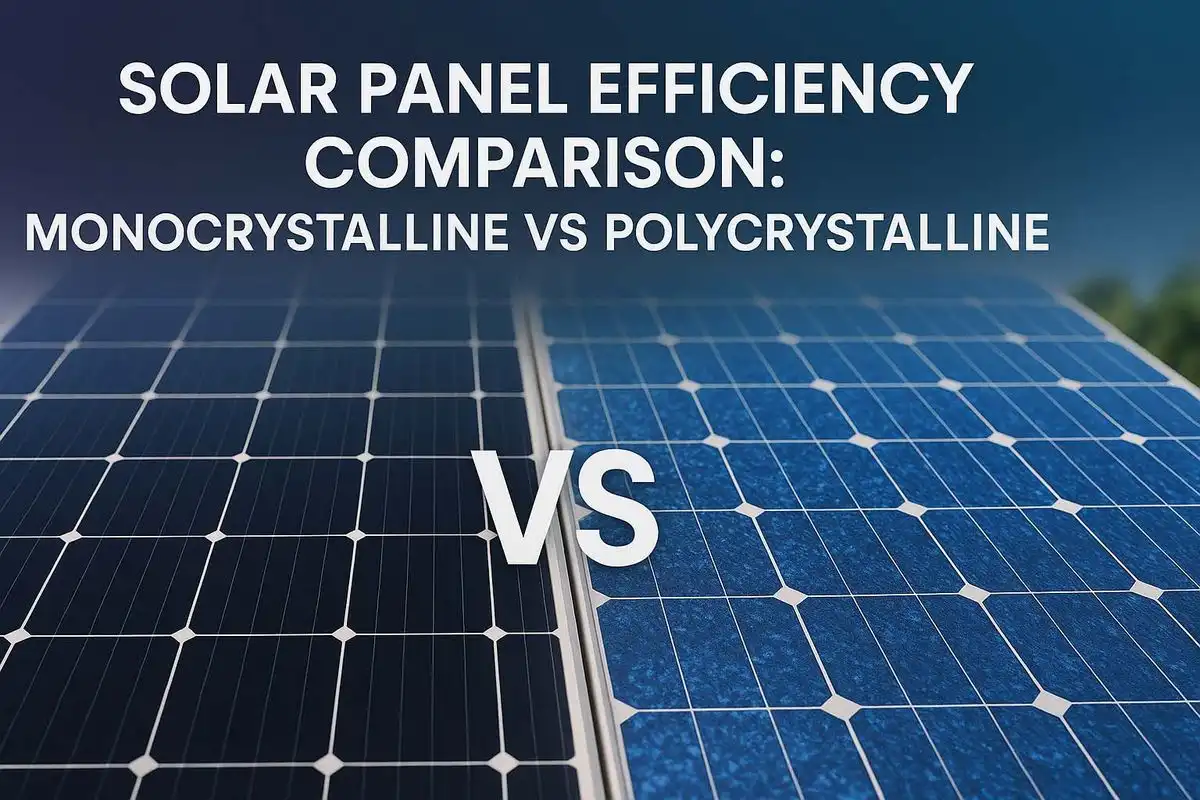
Read our detailed comparison of monocrystalline vs polycrystalline solar panels in Nigeria before deciding.
N-Type TOPCon Solar Panels
N-Type TOPCon panels are becoming increasingly common in the high-efficiency segment of the solar market.
Depending on the manufacturer and model, potential benefits can include:
- High module efficiency
- Lower long-term degradation
- Good temperature characteristics
- Strong performance over the panel’s useful life
However, N-Type technology can carry a premium.
Do not pay more simply because a seller writes “N-Type” or “TOPCon” in an advert. Verify the manufacturer’s datasheet and exact model.
What About Bifacial Solar Panels?
Bifacial solar panels can produce electricity from both the front and rear sides of the module.
However, the additional rear-side generation depends heavily on how the panel is installed.
A bifacial panel mounted where very little reflected light reaches the back may not provide the same additional benefit as one installed over a reflective surface with sufficient clearance.
Therefore, don’t buy a bifacial panel purely because the word sounds more advanced. Consider the installation environment.
How to Compare Solar Panel Prices Correctly
One common mistake Nigerian buyers make is comparing solar panels only by their selling price.
Imagine:
- Panel A: 400W for ₦100,000
- Panel B: 550W for ₦130,000
Panel B costs ₦30,000 more, but it also provides significantly more rated capacity.
A better comparison is price per watt.
Example
400W panel at ₦100,000:
₦100,000 ÷ 400W = ₦250 per watt
550W panel at ₦130,000:
₦130,000 ÷ 550W = approximately ₦236 per watt
In this example, the more expensive panel actually provides the lower cost per watt.
However, price per watt should not be your only consideration.
Also compare:
- Brand
- Module efficiency
- Cell technology
- Product warranty
- Performance warranty
- Degradation rate
- Panel dimensions
- Weight
- Voltage
- Current
- Temperature coefficient
- Authenticity
- After-sales support
What Affects Solar Panel Prices in Nigeria?
Several factors explain why one vendor may quote ₦120,000 for a panel while another asks ₦150,000.
1. Solar Panel Wattage
Higher-capacity panels usually cost more in absolute terms.
A 550W panel therefore normally costs more than a 200W panel from a comparable product category.
However, high-wattage panels can sometimes offer a better cost per watt.
2. Brand
Established manufacturers can command higher prices because of their manufacturing scale, product history, documentation, warranties and market reputation.
Be careful with the term “Tier 1.”
Tier 1 is primarily an industry classification associated with manufacturer bankability; it should not be treated as a standalone guarantee that a particular panel is automatically superior to every non-Tier-1 product.
Always evaluate the actual model.
3. Solar Cell Technology
Prices can differ between:
- Polycrystalline
- Standard monocrystalline
- Mono-PERC
- Half-cell modules
- N-Type TOPCon
- Bifacial modules
Newer and higher-efficiency technologies can carry higher prices.
4. Exchange Rate and Import Costs
A large proportion of the solar equipment sold in Nigeria is imported.
Changes in foreign-exchange rates, shipping costs, duties and logistics can therefore affect retail prices.
This is one reason a solar panel price you saw several months ago may no longer be available today.
5. Retailer and Purchase Quantity
Buying one panel at retail price can cost more per unit than purchasing 10, 20 or 50 panels.
Installers, commercial buyers and resellers may therefore be able to negotiate bulk discounts.
6. Location
Solar panel prices may differ between Lagos, Abuja, Port Harcourt, Kano, Ibadan, Enugu, Benin City and other locations.
Transportation costs can increase prices where stock needs to be transported long distances from major distribution centres.
7. Warranty and After-Sales Support
Two seemingly identical panels may be sold at different prices because one seller provides genuine warranty support while another simply sells the product without meaningful after-sales assistance.
This difference becomes important if you later discover a manufacturing defect.
How Many Solar Panels Do You Need?
The number of panels required depends on the solar-array capacity you want, the wattage of each panel, available roof space and the electrical design of the system.
For example:
| Approximate Array Size | Using 400W Panels | Using 550W Panels |
|---|---|---|
| Around 1kW | 3 panels | 2 panels |
| Around 2kW | 5 panels | 4 panels |
| Around 3kW | 8 panels | 6 panels |
| Around 4kW | 10 panels | 8 panels |
| Around 5kW | 13 panels | 10 panels |
| Around 10kW | 25 panels | 19 panels |
These figures are only simple wattage examples.
A professional solar design must also consider:
- Your daily electricity consumption
- Peak load
- Available sunlight
- Roof orientation
- Shading
- Inverter MPPT voltage range
- Maximum PV input voltage
- Maximum PV input current
- Panel Voc and Vmp
- Series and parallel configuration
- Battery capacity
- Desired backup time
Do not simply buy a random number of panels because another house has the same number.
Two homes can have completely different power requirements.
How Much Does a Complete Solar System Cost in Nigeria?
The prices discussed on this page are primarily for solar panels themselves.
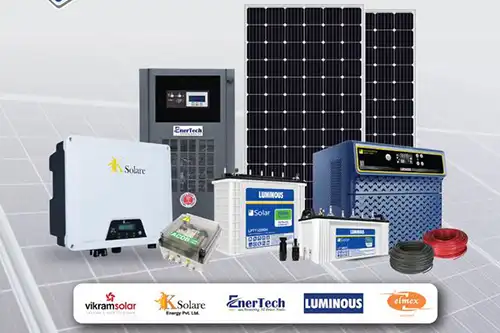
A complete solar power installation may also require:
- Solar inverter
- Battery or battery bank
- Mounting structure
- DC protection
- AC protection
- Solar cables
- Connectors
- Changeover equipment
- Earthing
- Installation materials
- Professional labour
Therefore, the price of your panels should not be confused with the total price of installing solar power in your home or business.
If you want to know how much the entire solar setup costs, including inverter, batteries, solar panels, accessories and installation, read our dedicated guide:
How Much Does a Complete Solar System Cost in Nigeria?
That article covers complete systems separately so you can compare full installation budgets without confusing them with individual solar-panel prices.
Where to Buy Solar Panels in Nigeria
Solar panels can be purchased through several channels.
Solar Dealers and Distributors
Established solar dealers and distributors may offer:
- Multiple brands
- Product warranties
- Technical specifications
- Installation advice
- Bulk purchasing
- Delivery
Always request a receipt or invoice showing the exact model you purchased.
Solar Installation Companies
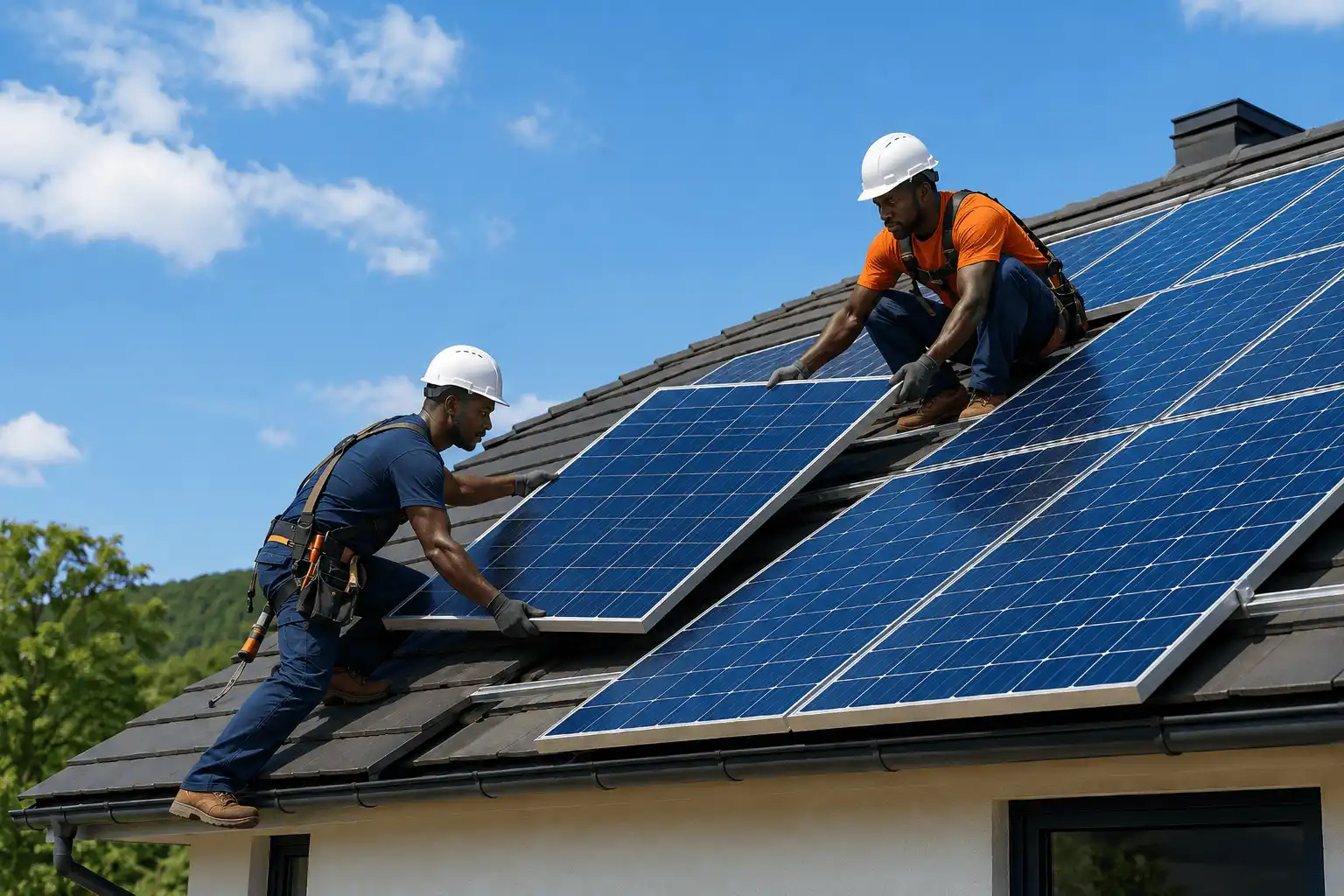
Buying through an established solar installation company can be convenient if you also need system design, mounting and installation.
The company can help determine whether the proposed panels are electrically compatible with the inverter and other components.
Online Marketplaces
Solar panels are also advertised on marketplaces such as Jumia and Jiji.
If buying through an online marketplace, pay attention to:
- Seller reputation
- Customer reviews
- Exact model
- Warranty
- Return conditions
- Product specifications
- Seller location
Avoid choosing a panel simply because it has the lowest advertised price.
Physical Solar and Electronics Markets
Solar products are widely sold in major Nigerian commercial centres, including areas such as Alaba International Market and Trade Fair in Lagos.
Physical markets can offer competitive pricing and numerous brands, but buyers need to be especially careful about product authenticity and warranty.
How to Identify an Original Solar Panel
Counterfeit, relabelled, used and inaccurately rated solar equipment can be a problem when buying from unknown sellers.
Here are important things to check.
Check the Manufacturer’s Label
The rear label should normally show important information such as:
- Manufacturer
- Model number
- Maximum power
- Voltage at maximum power
- Current at maximum power
- Open-circuit voltage
- Short-circuit current
- Maximum system voltage
- Serial number
- Certification information
Compare the model against the manufacturer’s official datasheet whenever possible.
Check the Serial Number
Premium manufacturers commonly provide traceable serial numbers.
If the seller is offering a supposedly premium panel but cannot provide a clear model or serial identification, investigate further before paying.
Inspect the Frame and Glass
Check for:
- Damaged aluminium framing
- Cracked glass
- Delamination
- Moisture
- Bubbles
- Damaged junction boxes
- Burn marks
- Cell cracks
- Poorly applied replacement labels
Visible damage can affect safety, performance and lifespan.
Check the Electrical Specifications
The technician can measure electrical characteristics and compare them with the manufacturer’s stated specifications.
A field measurement alone does not reproduce laboratory Standard Test Conditions, but serious inconsistencies can justify further investigation.
Be Suspicious of Unrealistically Low Prices
A genuine high-wattage premium panel being offered dramatically below prevailing market prices deserves extra scrutiny.
There may be a legitimate reason—clearance stock or bulk purchasing, for example—but verify the model, condition, warranty and seller before assuming you’ve found a bargain.
Which Solar Panel Is Best for Nigeria?
There is no single solar panel that is automatically best for every Nigerian home.
Your best choice depends on:
- Budget
- Available roof space
- Required solar capacity
- Location
- System design
- Brand preference
- Warranty
- Installer recommendation
For buyers with limited roof space, a high-efficiency 450W–650W monocrystalline or N-Type panel may make more sense than filling the roof with numerous low-wattage modules.
For buyers expanding an existing installation, electrical compatibility with the existing array may be more important than buying the newest panel available.
Solar Panel Buying Checklist
Before paying for a solar panel in Nigeria, check the following:
- Confirm the exact wattage.
- Confirm the brand and model number.
- Ask whether it is monocrystalline, polycrystalline or N-Type.
- Check whether it is monofacial or bifacial.
- Compare price per watt.
- Check the module efficiency.
- Verify voltage and current specifications.
- Check panel dimensions.
- Check panel weight.
- Inspect the frame and glass.
- Ask for the manufacturer’s datasheet.
- Verify the serial number where possible.
- Ask about product and performance warranties.
- Find out who handles warranty claims.
- Confirm that the panel is compatible with your proposed inverter.
- Compare quotations from reputable sellers.
- Get professional advice before purchasing a large quantity.
Frequently Asked Questions About Solar Panel Prices in Nigeria
Conclusion: Solar Panel Price in Nigeria
The solar panel price in Nigeria in 2026 can range from less than ₦20,000 for very small modules to around ₦200,000 or more for high-output premium panels.
For most modern residential and commercial installations, panels between 400W and 650W are increasingly relevant because they allow buyers to achieve higher array capacities with fewer modules.
As a general market guide:
- 100W: ₦20,000 – ₦35,000
- 200W: ₦34,000 – ₦65,000
- 300W: ₦50,000 – ₦85,000
- 400W: ₦90,000 – ₦115,000
- 450W: ₦95,000 – ₦130,000
- 550W: ₦115,000 – ₦165,000
- 620W–650W: ₦155,000 – ₦200,000+
Do not make your decision based entirely on the cheapest price.
Compare wattage, price per watt, efficiency, brand, technology, warranty, electrical specifications and authenticity before purchasing.
And remember: these are prices for the solar panels, not the entire solar installation.
For inverter, battery, panels, accessories and installation costs combined, read our separate guide on Complete Solar System Cost in Nigeria.
Related Solar Buying Guides
- Solar Battery Price in Nigeria
- Best Solar Inverter in Nigeria
- Solar Street Light Price in Nigeria
- Solar Generator Price in Nigeria
- Monocrystalline vs Polycrystalline Solar Panels in Nigeria
- Solar Installation Guide for Estates and Compounds in Nigeria
Price ranges are indicative Nigerian market estimates for 2026 and may change with exchange rates, import costs, stock availability, location, brand and seller. Confirm current prices before purchasing.

Leave a Reply


- Trending
- Latest
- Comments



Solar Energy Supply Stores provides current solar prices in Nigeria, expert product reviews, comparisons, and practical buying guides for solar panels, inverters, batteries, generators, and complete solar systems nationwide.
Comments 5